
In a beauty store, shoppers rarely make decisions from packaging alone.
They stop. They compare shades. They test textures on the back of their hand. They check whether a skincare product feels premium, whether a lipstick color looks wearable, or whether a fragrance display feels worth exploring. Sometimes the product itself is good, but the way it is presented makes the difference between being ignored and being picked up.
That is why Cosmetic POP Displays matter so much in beauty retail.
A cosmetic display is not just a place to put products. It guides how shoppers see, touch, compare, and remember a brand. For makeup, skincare, fragrance, nail polish, and beauty gift sets, the right display can create a small but powerful retail moment.
A good display does not simply shout for attention. It makes the product easier to understand. It gives testers a proper place. It keeps shades organized. It makes the brand feel intentional. And, just as important, it still works after a busy day of shoppers touching, moving, testing, and buying products.
This article looks at how POP Displays help beauty brands attract customers in real retail stores — not just in product renderings.
Visibility is important, but for beauty products, visibility alone is not enough.
A snack display can often sell from a strong graphic and a simple price message. Beauty is different. Shoppers want to get closer. They want to see color, texture, packaging, product claims, scent, finish, and sometimes even how a product feels in the hand.
A lipstick display, for example, must do more than hold tubes. It needs to show shade families clearly. A foundation display needs to help shoppers compare tones without feeling lost. A skincare display should make the routine or product function easy to understand. A fragrance display needs space for trial, not just bottles lined up like stock.
This is where Cosmetic POP Displays become more valuable than ordinary shelving. They give beauty products a dedicated space to explain themselves.
The display helps answer the shopper’s quiet questions:
Is this product for me?
Can I try it?
Which shade or formula should I choose?
Does this brand feel trustworthy?
When the display answers those questions quickly, the product has a better chance of being considered.
Beauty shoppers often browse first and decide later.
A good Makeup Display helps move them from looking to interacting. That may sound simple, but it depends on small design details: product angle, tester position, label clarity, mirror placement, lighting, product spacing, and even how comfortable it feels to pick something up.
For makeup products, the display should make testing feel natural, not awkward. If the tester is hard to reach, shoppers may not bother. If the shades are packed too tightly, they may not pull one out. If the product area looks messy or unclear, they may walk away even if the product itself is strong.
In beauty retail, interaction is part of selling.
A cosmetic shop display stand should help shoppers do what they already want to do: compare, test, and choose with less hesitation.
Beauty products often come with many SKUs. That is both a strength and a challenge.
A nail polish line may include dozens of colors. A lipstick collection may cover nude, red, coral, berry, and seasonal shades. A skincare series may include cleanser, toner, serum, cream, sunscreen, and masks. Without a clear display structure, the product story becomes hard to follow.
An effective cosmetic shop display stand organizes products in a way shoppers can understand quickly.
For makeup, this often means grouping by shade family, finish, or product type. For skincare, it may mean arranging products by routine steps or skin concern. For fragrance, it may mean separating collections by scent profile or campaign theme. For nail polish, color order matters more than many brands realize.
Good organization reduces the feeling of clutter. It also helps staff maintain the display during the day.
A display that only looks good when perfectly filled is not enough. It needs to keep its logic after customers pick up products and staff restock them.
Some beauty displays look impressive in photos but are difficult to shop in real life.
The products are packed too tightly. Testers are mixed with sale stock. Labels are small. Bottles are placed too deep. Shoppers worry that if they pull one product out, the whole row may shift.
That is a problem.
For a makeup display stand retail store environment, access matters as much as appearance. Testers should be easy to identify. Sale products should be clearly separated. Shade names or product categories should be visible. If the display includes small slots, trays, or holders, they should match the product size closely enough to stay neat but not so tightly that shoppers struggle to pick up the item.
The display should invite touch.
Especially with cosmetics, a shopper who picks up the product is already one step closer to buying.
Beauty brands often want strong visual impact. That makes sense. The category is visual by nature.
But strong branding does not always mean louder graphics, bigger logos, or brighter colors. In beauty retail, premium presentation often comes from control: good spacing, clean surfaces, refined lighting, balanced material choices, and graphics that support the product rather than compete with it.
A display for a high-end skincare line should not feel like a temporary discount bin. A colorful makeup launch can be more playful, but it still needs clarity. A fragrance display may need fewer products and more atmosphere. A nail polish display can use color as the main attraction, but the structure should still feel clean and easy to shop.
The best beauty POP Displays feel designed, not crowded.
That distinction matters.
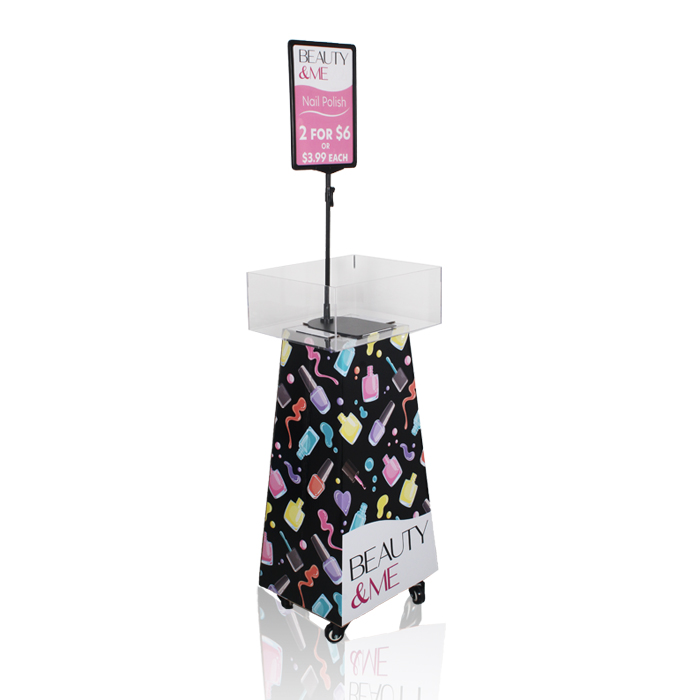
Countertop displays are common in beauty retail because many cosmetics are small and easy to test at close range.
A countertop Makeup Display works well for lipstick, nail polish, perfume testers, skincare samples, travel-size beauty products, and small promotional items. These displays are often placed on beauty counters, cashier areas, service counters, or consultation tables.
The advantage is intimacy. Shoppers stand close to the product. They can see details, pick up testers, compare shades, and ask staff questions without walking to another aisle.
But countertop displays need discipline. If they hold too many products, they quickly look crowded. If they are too tall, they may block the counter. If they are too light, they may feel unstable when shoppers handle products.
For beauty counters, small does not mean simple. A small display must work hard.
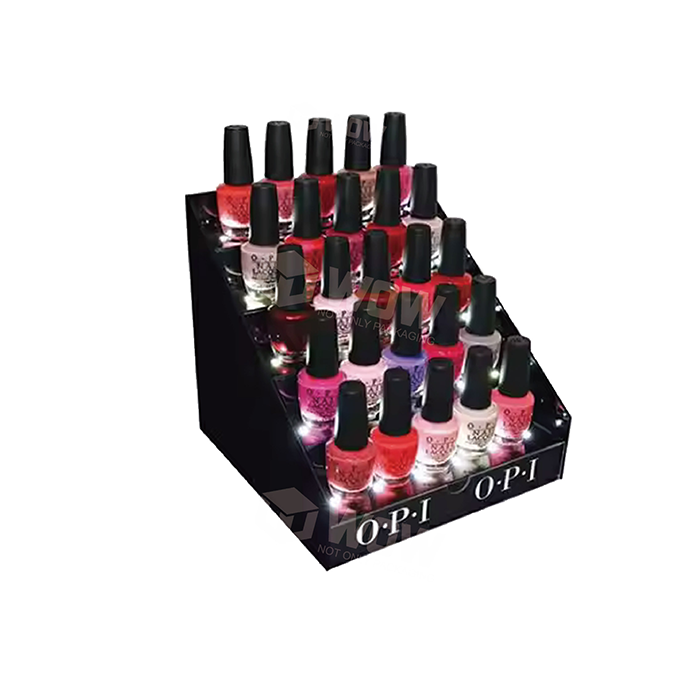
Floor displays are useful when a beauty brand needs more visibility in a high-traffic retail space.
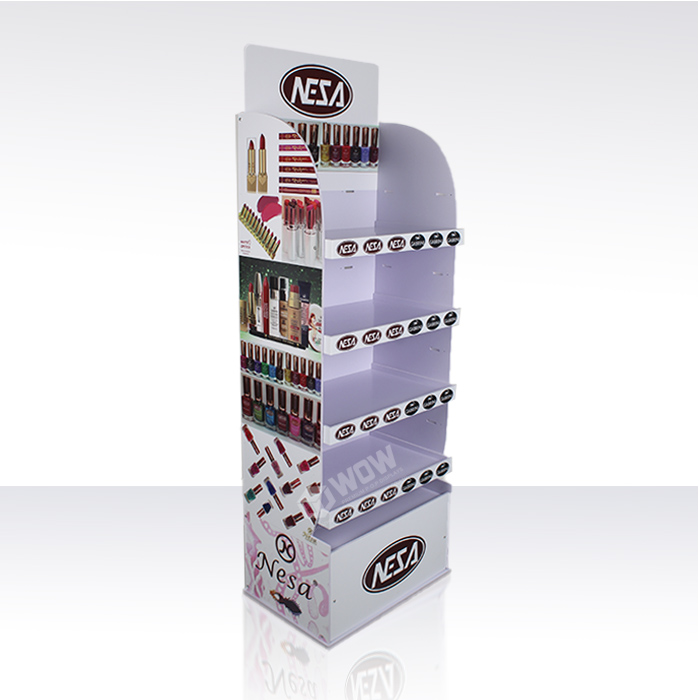
They are often used for product launches, seasonal promotions, skincare sets, haircare series, beauty store entrances, or dedicated promotional zones. Compared with countertop displays, floor cosmetic displays can carry a stronger campaign message and display a wider product range.
A floor display may include shelves, posters, tester areas, lightboxes, mirrors, or product education panels. It can present a full routine or collection rather than one product group.
This format is especially useful when the brand needs to stand apart from the regular shelf. A new product launch, for example, may be lost if placed directly beside existing items. A dedicated floor display gives it its own space and makes the launch feel more intentional.
Tester displays deserve special attention because they are one of the biggest differences between beauty displays and many other POP display categories.
A tester display needs to be clear, clean, and easy to maintain. Shoppers should immediately understand which products are for testing and which products are for purchase. If the two areas are mixed together, the display can become messy very quickly.
For lipstick, foundation, fragrance, skincare, nail polish, or haircare samples, the tester area should be designed for repeated use. That means wipeable surfaces, removable trays, clear labels, and enough space for the product to be returned properly.
It is not glamorous, but it matters.
A dirty or poorly maintained tester area can damage trust. In beauty retail, trust is part of the purchase decision.
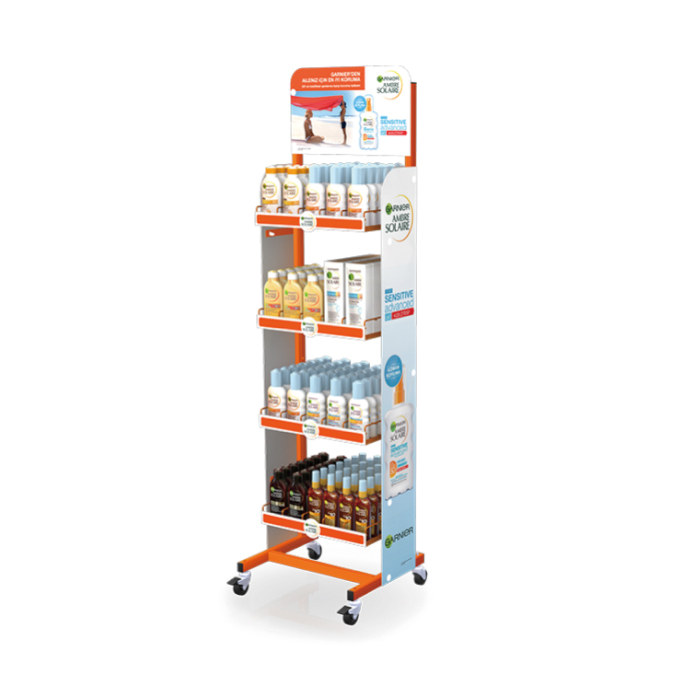
Wall and shelf displays work well for skincare, haircare, fragrance, body care, and multi-SKU beauty collections.
These displays are often used in beauty stores, pharmacies, department stores, and chain retail environments. They may not feel as dramatic as a launch display, but they are important for everyday merchandising.
A wall display needs strong category logic. Shelf height, label placement, product blocking, lighting, and replenishment access all affect how the area performs. If the display holds many SKUs, visual grouping becomes essential.
For skincare, products may be arranged by routine step. For haircare, they may be grouped by function. For fragrance, collections may need more breathing room. For cosmetics, shade order should be clear enough that shoppers can compare without staff help.
A good wall display does not make the shopper work too hard.
Lighting can help a cosmetic display, but it can also create problems.
For lipstick, foundation, nail polish, and color cosmetics, accurate color perception is critical. If lighting is too warm, too cool, or too dramatic, shades may look different from how they appear in daily use. That can create disappointment later.
This does not mean beauty displays should avoid lighting. Used well, lighting can guide attention, highlight hero products, and make materials feel more premium. LED strips, backlit headers, mirror lighting, or acrylic light panels can all work.
The key is restraint.
Lighting should help the shopper understand the product. It should not distort the product or turn the display into a decoration that overpowers the merchandise.
A cosmetic display is touched more than many other retail fixtures.
People open caps, test products, move bottles, compare shades, and sometimes leave testers in the wrong place. Powder, liquid, cream, fragrance, brushes, caps, and sample cards can all affect the look of the display.
This is why daily maintenance should be considered during design.
A cosmetic shop display stand should use materials and structures that are easy to clean. Acrylic trays, removable inserts, metal holders, PVC panels, and coated surfaces can all help when selected properly. Product slots should not trap dust or residue. Tester areas should be easy for store staff to reset.
A display that looks premium on day one but becomes messy after one week is not a successful retail solution.
Beauty brands often want to show a wide product range. Understandable. More shades, more formulas, more choices.
But more product does not always create a better display.
Too many SKUs can slow down decision-making. Shoppers may struggle to compare shades or understand the product story. The display may also lose its premium feel.
Good capacity planning is about balance.
For makeup, color grouping helps. For skincare, routine steps help. For fragrance, collection separation helps. For gift sets, clear price and value communication helps. Leaving some visual space is not wasted space — sometimes it is what makes the display easier to shop.
This is especially important for high-end beauty brands. A crowded display can make even an expensive product feel less premium.
Acrylic is widely used in cosmetic displays because it offers a clean and transparent look.
It works well for lipstick, nail polish, fragrance, skincare samples, small makeup products, and tester trays. Acrylic can be cut, polished, bent, printed, and shaped into holders, shelves, risers, and compartments. It keeps the product visible while giving the display a tidy structure.
The advantage is clarity.
The limitation is surface care. Acrylic can scratch if handled roughly, so packaging, cleaning, and daily use need attention. For premium beauty displays, edge finishing and bonding quality also matter. Poor acrylic finishing can make a display look cheap very quickly.
Metal is useful when a display needs more strength, a longer service life, or a more fixture-like presence.
It can support mirrors, lighting, acrylic components, heavy product sets, or larger structures. Metal frames are often used in semi-permanent or permanent beauty retail displays, especially for department stores, shop-in-shop areas, or branded counters.
The benefit is stability.
The trade-off is cost and weight. Metal displays usually require more production planning, more careful finishing, and stronger packaging. But for beauty brands that want a long-term in-store presence, metal can be a strong choice.
PVC and cardboard are often used for short-term or mid-term promotional beauty displays.
Cardboard is cost-efficient, lightweight, and strong in printed graphics. It works well for seasonal campaigns, gift sets, limited offers, sample programs, and temporary launches.
PVC is more durable than cardboard and can create a cleaner structure for medium-term retail use. It can be printed, shaped, and combined with other materials.
Neither material should be dismissed as “cheap” automatically. The right choice depends on the campaign duration, store environment, product weight, and brand position. A short-term promotion does not always need a heavy permanent fixture. At the same time, a long-term tester display should not rely on a material that cannot handle repeated daily use.
Many strong cosmetic POP displays use more than one material.
Acrylic may be used for product visibility. Metal can provide structure. PVC or printed panels can carry campaign graphics. Wood can add warmth. Lighting can highlight hero products. Mirrors can support testing. Each material plays a different role.
This is where custom display development becomes valuable.
A mixed-material display is not about making the design more complicated. It is about choosing the right material for each part of the job: structure, branding, product access, durability, cleaning, packing, and store presentation.
For beauty brands, this approach can create a display that feels more considered and more aligned with the retail environment.
A new beauty product needs more than shelf space.
If it sits quietly beside existing products, shoppers may not notice it. A dedicated display can give the launch a stronger entrance into the store.
For new lipstick, skincare, fragrance, nail polish, or haircare launches, the display should highlight the hero product and make the product story easy to understand. This may include a campaign header, tester area, shade comparison, ingredient message, or before-and-after visual.
The goal is not to explain everything. The goal is to make shoppers curious enough to stop.
Seasonal beauty promotions need a slightly different approach.
Holiday gift sets, Mother’s Day kits, Valentine’s Day beauty bundles, travel sets, and limited-edition products all rely on fast understanding. Shoppers should quickly see what the set includes, why it works as a gift, and what makes it worth buying now.
The display should make the offer feel clear and attractive. A messy pile of gift sets does not create the same effect as a structured display with visible packaging, price communication, and enough room for the products to feel special.
For seasonal promotions, the display often carries part of the emotion of the campaign.
For beauty brands selling across multiple stores, the display needs to be more than attractive.
It must be repeatable.
A makeup display stand retail store program may need consistent graphics, stable materials, safe packing, simple assembly, and clear restocking logic across many locations. Store teams may not have time to figure out a complicated setup. If the display is too difficult, it may not be installed correctly.
This is where production and supply chain thinking matter.
The display should be designed for the store, but also for shipping, assembly, maintenance, and rollout. A beautiful prototype is only the beginning. The real test is whether the same display can arrive, install, and perform consistently across retail locations.
This is probably the most common mistake.
Brands want to show everything. Every shade, every formula, every SKU, every claim. The display becomes full, but the shopper becomes unsure.
A better cosmetic display has priorities. It shows enough to support choice, but not so much that the product story disappears. Hero products should stand out. Shade ranges should be organized. Secondary items should not compete with the main message.
In beauty retail, empty space can be useful. It gives the product room to breathe.
Tester areas can make or break a beauty display.
If testers are hard to find, shoppers may not engage. If testers are dirty, shoppers may lose trust. If tester products are mixed with sale products, the display becomes confusing.
Good tester design needs clear separation, easy cleaning, durable surfaces, and enough space for repeated use. It also needs to consider staff routines. If a display is too hard to reset, it will not stay clean and organized for long.
Material choice sends a message.
A luxury skincare brand may need polished acrylic, metal accents, soft lighting, or a more refined structure. A short-term promotional kit may work perfectly with printed cardboard or PVC. A youthful makeup launch may need bold graphics and color. A clean clinical skincare brand may need a simpler, more controlled presentation.
The most expensive material is not always the right material.
The right material is the one that matches the brand, product, campaign length, store environment, and budget.
FAQ
1.What are cosmetic POP displays?
Cosmetic POP displays are retail display fixtures used to present, promote, organize, and support product testing for beauty products. They are commonly used for makeup, skincare, fragrance, nail polish, beauty samples, gift sets, and promotional campaigns.
2.What products work best on cosmetic POP displays?
Products such as lipstick, nail polish, foundation, skincare, fragrance, beauty samples, travel-size products, makeup collections, and gift sets often work well on cosmetic POP displays because shoppers benefit from close viewing, testing, and comparison.
3.What materials are best for makeup display stands?
Acrylic is strong for clean visibility, metal is useful for durable and premium structures, PVC and cardboard work well for promotional campaigns, and mixed materials are often used for custom beauty display projects that require both branding and retail performance.
4.Can cosmetic shop display stands be customized?
Yes. Cosmetic shop display stands can be customized by product size, SKU quantity, tester layout, brand graphics, lighting, material, structure, packing method, and retail environment.
5.How do cosmetic POP displays help attract customers?
They help attract customers by improving product visibility, supporting product testing, organizing shades or product lines, creating stronger brand presentation, and making the shopping process easier to follow.
Conclusion
Cosmetic POP displays are not just product holders.
In beauty retail, they shape how shoppers see, test, compare, and choose products. A well-designed display can make a product feel easier to understand, easier to try, and more connected to the brand.
That is why the best beauty displays are built around real shopping behavior. They consider product visibility, shade organization, tester use, lighting, material selection, cleaning, replenishment, and retail rollout.
For beauty brands, a display is part of the product experience.
It can turn a shelf item into something shoppers want to pick up.
Planning a beauty retail display project? Talk to our team about custom POP Displays designed for product visibility, shopper interaction, and real store execution.


3/F No. 6 Hedi Road, Gongming Street, Guangming District, Shenzhen City, GD, China, 518106


