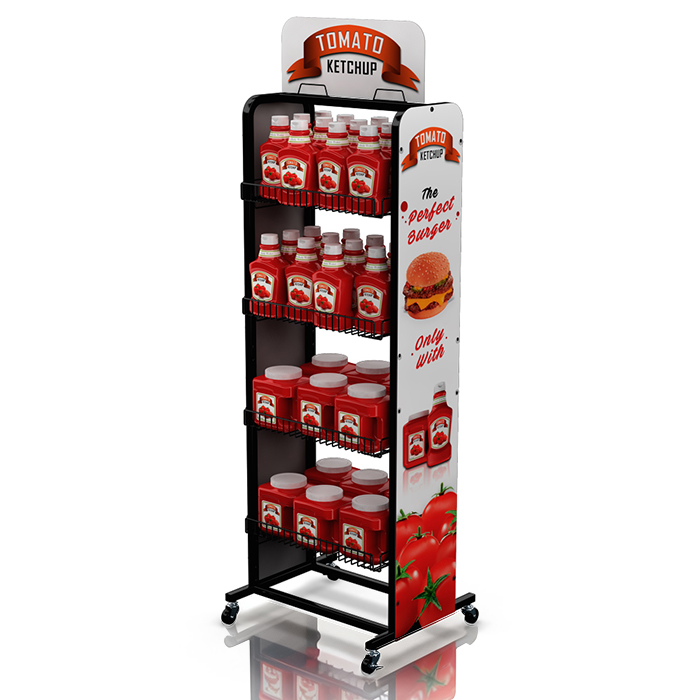
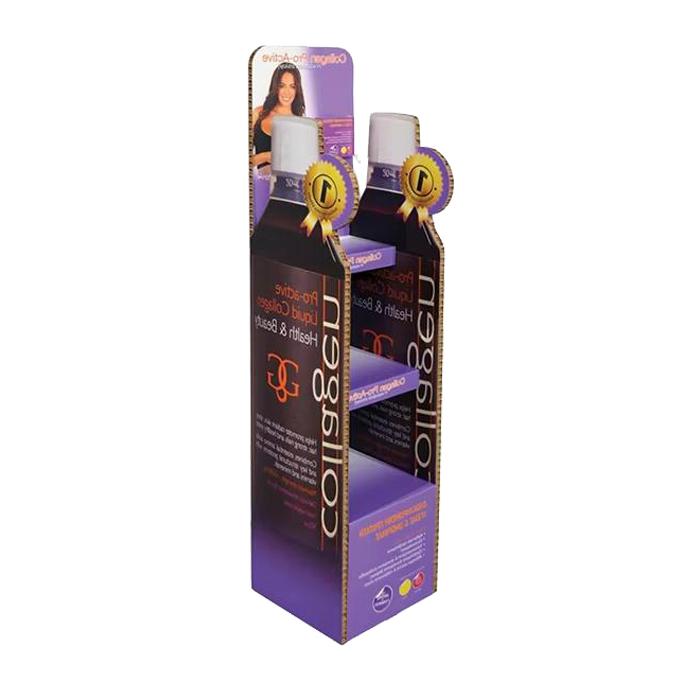
Most FSDU briefs arrive with a photo of a competitor’s floor stand and almost no load data. That is how brands order a pretty cardboard tower that collapses under beverage multipacks, or pay for metal when a six-week snack launch only needed corrugated shelves.
An FSDU (Free Standing Display Unit) is a freestanding floor POP / POS display that holds product on shelves, trays, hooks, or compartments without relying on gondola shelving. This buying guide covers what an FSDU is, when to use one, which material fits the job, and what to put in the RFQ. Browse WOW Packaging Display’s custom FSDU range while you lock those inputs.
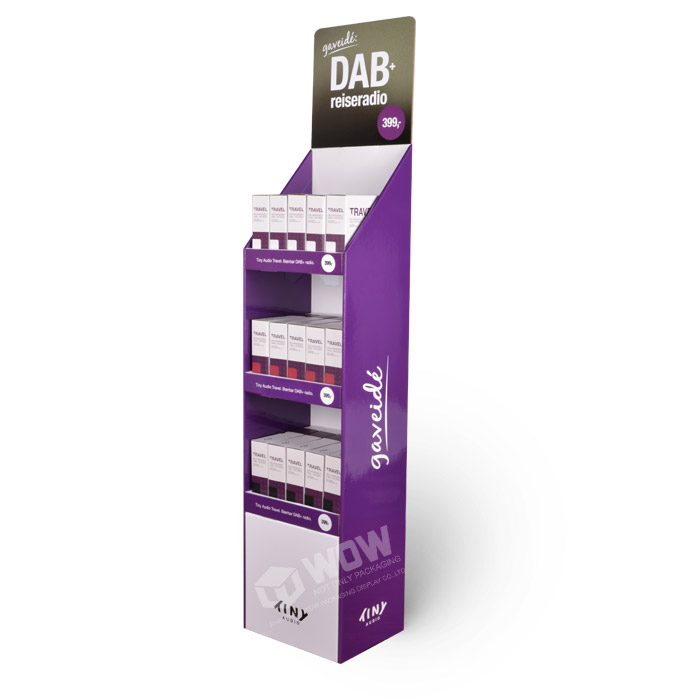
FSDU means Free Standing Display Unit. In retail language it sits in the same family as floor displays and floor-standing POS units. The point of the format is separation from the regular shelf set: your brand gets its own vertical merchandising block in an aisle, endcap pocket, or promo bay.
A proper FSDU organizes facings. Shoppers see SKUs stacked or hung at readable heights, not dumped in a pile. That is the main difference from a dump bin, which wins on grab-and-go volume but loses when packs need neat facing or multiple height levels.
WOW builds FSDUs as part of its broader floor display program, covering temporary cardboard units and longer-stay plastic or metal structures.
Order an FSDU when the product needs structure: bottles on shelves, boxed SKUs in tiers, accessories on hooks, beauty or snack lines that must look packed and readable. Use it for launches, seasonal takeovers, and secondary placements where you cannot wait for permanent fixture space.
Skip FSDU when the offer is pure impulse dig-and-grab. A dump bin is cheaper and faster for candy bags, soft toys, or clearance packs. Skip it again when the retailer wants a club-store shipper that arrives as a loaded pallet display. And if the sell is at checkout with a small SKU set, a CDU / countertop unit beats a floor stand.
| Format | Best job | Weak when |
|---|---|---|
| FSDU | Faced product, multi-tier merchandising, brand blocking on the floor | Loose impulse dig, or club-store pallet volume |
| Dump bin | Fast grab, high fill, low-price impulse | Products need tidy facings or premium presentation |
| Pallet display | High-volume club / supermarket shippers | Small footprint promo pockets or light accessory lines |
| CDU / countertop | Checkout and service-counter impulse | You need aisle interruption and vertical brand height |
For most FMCG promotions under about 8–12 weeks, corrugated cardboard is the default FSDU material. It ships flat, prints campaign graphics hard, assembles without tools, and recycles after the push. WOW’s cardboard FSDU specs commonly list flat-pack delivery, MOQ around 100 pcs, sample lead time of 1–2 days, and bulk production in about 10–12 days.
Move off cardboard when any of these show up: dense beverage loads, long store life, wet cleaning near entrances, or retailer preference for permanent fixtures. Plastic / PVC suits beverage and dairy-style freestanding units that need more moisture resistance. Metal suits liquor, hardware, and long-stay aisle racks. Acrylic or hybrid builds fit premium beauty floors where clear trays matter more than full-bleed board print.
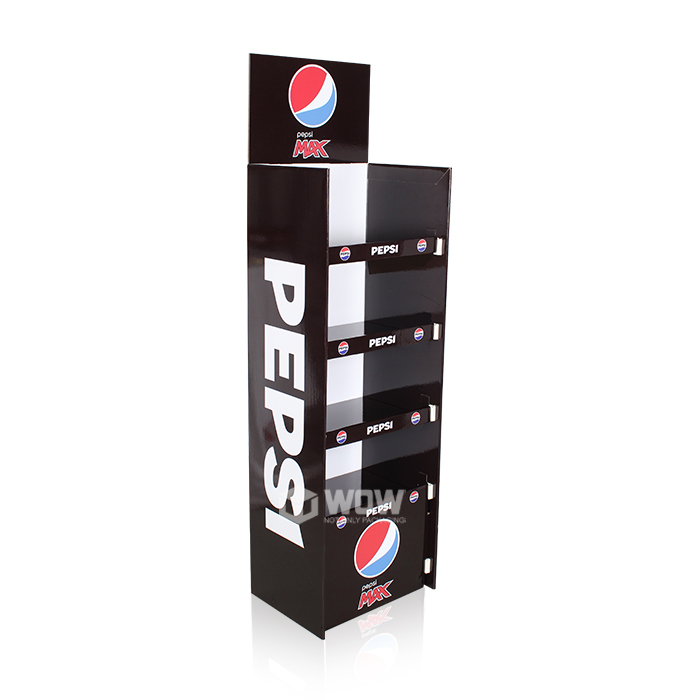
A reinforced beverage example is this Pepsi cardboard FSDU store display with shelf stand (around 400 × 300 × 1600 mm, corrugated, flat pack). For lighter accessories and POS programs, see the cardboard FSDU for retail accessories (around 400 × 300 × 1200 mm).
| Material | Use it when | Watch-outs |
|---|---|---|
| Corrugated cardboard | Seasonal and promotional FSDUs, snacks, accessories, cosmetics launches | Heavy fill and moisture cut life short |
| Plastic / PVC | Beverage, dairy-style, or wetter floor zones | Higher unit cost than board |
| Metal | Liquor, hardware, multi-year aisle presence | Heavier freight, less “poster” print area |
| Acrylic / hybrid | Premium beauty or clear-tray merchandising | Not the first pick for short loud campaigns |
Shelf count and depth decide how the unit looks on day three. Four-tier cardboard towers work well for cosmetics, snacks, and multipacks because they keep facings readable from eye level down. Hook walls suit accessories and hanging packs. Header cards carry the offer; if the header is weak, the FSDU becomes anonymous furniture.
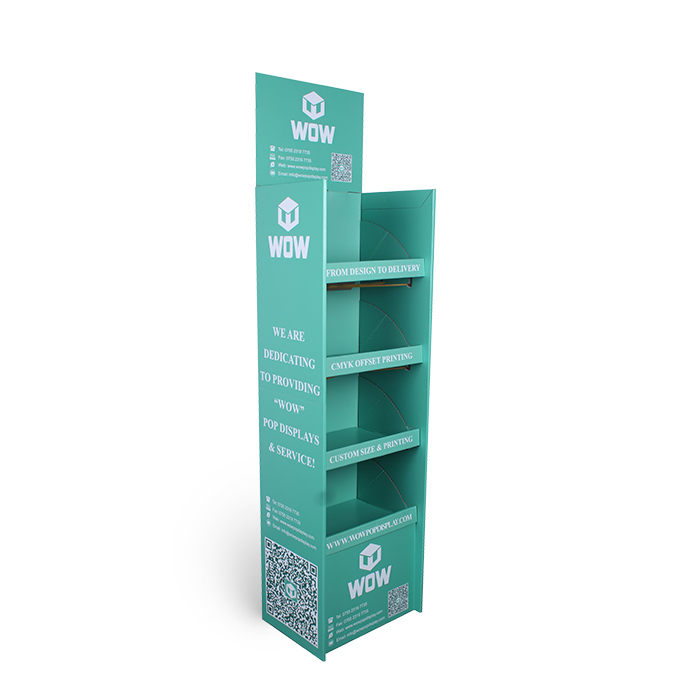
For a clean vertical example, review WOW’s 4 tiers cardboard POP up floor display stand (around 300 × 500 × 1600 mm). Ask for board grade and shelf reinforcement based on filled weight, not empty photos.
Also lock footprint early. Aisle FSDUs and endcap FSDUs are not the same size brief. If the retailer already owns the endcap, design to that bay. If the unit must move during restocking, discuss base stability before you add height for brand drama.
Flat-pack vs semi-assembled vs co-pack with product
Assembly time for store staff (good cardboard FSDUs aim for a few minutes, no tools)
Retailer dimension, tip-test, and print rules for the target chain
Print method and finish: offset, flexo, digital, matt / gloss lamination, spot UV
Sample approval before bulk, especially for first runs into a new retailer
Co-packing matters when you need store-ready fill. WOW’s order flow covers concept, structure, graphics, prototype, manufacture, and co-packing, which is the practical path for multi-store rollouts that cannot arrive as empty kits.
Send these six points before asking for a price:
Product size, unit weight, and how many facings per shelf
Campaign length and store count
Placement: aisle, endcap, entrance, or club floor
Material preference and why (cardboard default unless weight or duration says otherwise)
Pack-out method: flat pack, semi-assembled, or co-packed
Retailer rules and any reference photo of approved displays
If those six lines are clear, a factory can return a structure mockup, board grade recommendation, and a production timeline instead of a vague “custom quote.”
For most brand promotions, start with a corrugated cardboard FSDU sized to the product facing plan. Escalate to plastic or metal only when filled weight, store life, or retailer fixture rules make cardboard the wrong tool. Use a dump bin instead when the shopper should dig. Use a pallet display when volume and club logistics dominate.
Next step: send product pack size, filled shelf weight, campaign weeks, and target retailer to WOW, and ask for an FSDU structure proposal from the FSDU collection. Request a sample before bulk if this is a first store set.


3/F No. 6 Hedi Road, Gongming Street, Guangming District, Shenzhen City, GD, China, 518106