
In retail marketing, presentation can influence purchase decisions just as much as product quality or price. A product placed in the right location, supported by the right structure, and presented with the right branding can attract more attention and drive more sales. That is why brands, retailers, and distributors invest heavily in in-store merchandising solutions. Among the most common options are POP displays and POS displays.
Although these two terms are often used together, they are not exactly the same. Many buyers, especially new retail brands or importers, still confuse them. Some assume that POP and POS displays are interchangeable. Others know there is a difference but are not sure which one is better for a specific retail campaign.
The truth is that both POP displays and POS displays play important roles in retail promotion. The better choice depends on your product, store layout, campaign objective, and target customer behavior. For businesses that want to improve product visibility and increase in-store sales, understanding the difference between these two display types is essential.
WOW Display’s own retail display resources make a similar distinction. Its article on the topic explains that POS displays are usually designed for last-minute, impulse-driven purchases near checkout, while POP displays are used more broadly throughout the store to influence decisions before the customer reaches the register.
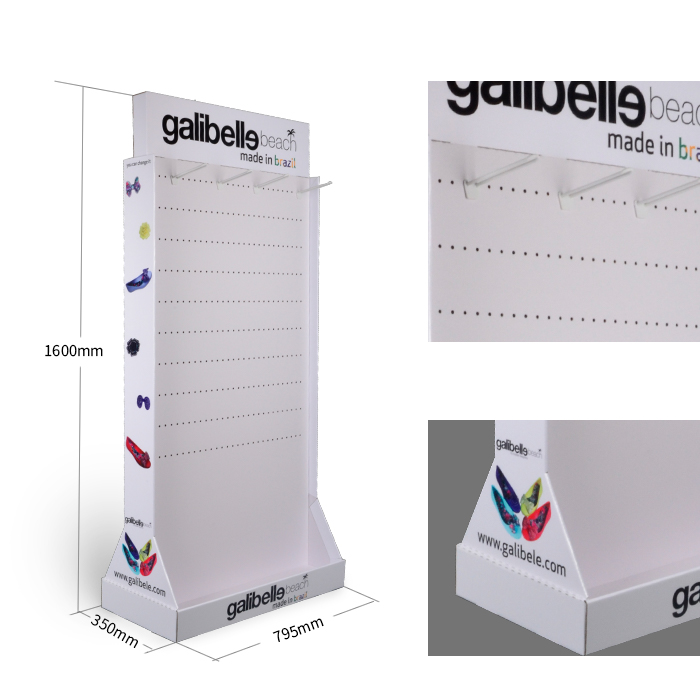
POP stands for Point of Purchase. A POP display is placed in the area where shoppers browse and choose products. Its main purpose is to attract attention, communicate product value, and encourage customers to stop, interact, and consider buying.
POP displays are commonly used in aisles, end caps, promotional zones, store entrances, and other high-traffic retail areas. They can be built in many forms, including floor display stands, dump bins, sidekick displays, pallet displays, tiered displays, and branded shelving units. WOW Display’s website specifically features these kinds of structures within its POP display offering, including floor displays, tiered displays, hook displays, and other customized merchandising formats.
A POP display is usually designed to do more than simply hold products. It helps tell a brand story, highlight product features, launch a new item, support seasonal promotions, or create a stronger visual presence within the store. For example, a branded floor display in the snack aisle can draw attention to a new flavor. A pallet display near the entrance can create strong visual impact for a high-volume promotion. A hook display can make small packaged products easier to browse.
In short, POP displays are ideal when your goal is to influence shoppers during the discovery and consideration stages of the buying journey.
POS stands for Point of Sale. A POS display is usually placed close to the checkout area or another final transaction point. Its purpose is to encourage quick purchasing decisions just before payment.
POS displays are often smaller and more compact than POP displays. Common examples include countertop displays, PDQ trays, small shelf units, compact cardboard displays, and other checkout-ready merchandising fixtures. WOW Display’s content about POS displays describes them as attention-grabbing retail tools placed near checkout counters or other busy spots to encourage last-minute purchases.
These displays work especially well for low-cost, fast-moving, or impulse-buy products such as cosmetics, snacks, beverages, accessories, small electronics, trial-size goods, and seasonal gift items. Because the customer is already close to paying, the display does not need to educate in great detail. Instead, it should create instant appeal and make the product easy to grab.
That is why POS displays are often used in retail strategies focused on increasing basket size, promoting trial purchases, or moving limited-time items quickly.
The main difference between POP and POS displays is where they are placed and when they influence the customer.
A POP display influences the customer while they are still shopping. It helps build awareness, encourages comparison, and supports product discovery across the store. A POS display, on the other hand, influences the customer at the final moment before payment. It is more directly tied to impulse buying and convenience. WOW Display states this distinction clearly in its resource content, explaining that POP displays aim to influence decisions throughout the store while POS displays focus on last-minute purchases.
Another difference is size and function. POP displays are often larger, more visually dominant, and more suitable for full product storytelling. They may support multiple SKUs, stronger graphics, or more complex structures. POS displays are usually more compact and optimized for limited counter or checkout space.
A third difference is campaign objective. POP displays are usually better for product education, brand building, category visibility, and promotional presentation. POS displays are usually better for quick conversions, add-on sales, and compact high-turnover merchandising.
Neither format is inherently better in every situation. Each one serves a different purpose in a retail promotion strategy.
A POP display is usually the better option when your brand needs stronger visual exposure in the selling area. If you are launching a new product, entering a competitive retail channel, or trying to stand out from neighboring brands, a POP display offers greater design freedom and more visual impact.
For example, floor displays are useful for beverages, snacks, toys, and household goods because they can hold larger product quantities and occupy strong traffic positions. WOW Display’s floor display pages emphasize versatility, lightweight construction, branding flexibility, and cost-effective manufacturing for these retail scenarios.
POP displays are also better when:
you need to explain product benefits,
you want to support a seasonal or thematic campaign,
you need a branded display that works beyond the checkout area,
you are promoting multiple SKUs together,
you want more freedom in shape, graphics, and product arrangement.
For B2B buyers such as importers, distributors, and brand owners, POP displays often create stronger merchandising value because they help secure better in-store attention and communicate a more complete retail concept.
A POS display is the better option when the main goal is to generate quick additional sales near the point of payment. If your product is affordable, easy to understand, and suitable for impulse purchase, a POS display can be extremely effective.
Counter displays are especially useful for cosmetics, confectionery, travel-size products, phone accessories, and other compact items. WOW Display’s product pages include countertop and PDQ-style solutions designed to maximize visibility in compact spaces and improve accessibility.
POS displays work well when:
your product is small and easy to grab,
your retail space is limited,
you want to increase average order value,
you are running a fast-moving promotion,
you need a lower-footprint display solution.
From a business perspective, POS displays can be highly efficient because they use minimal space while targeting customers at the moment they are most ready to buy.
The better choice depends on the purpose of your promotion.
If your campaign goal is awareness, launch visibility, brand storytelling, or category disruption, a POP display is usually better. It gives you more space to present products, stronger presence in the shopping area, and a better chance to influence the customer earlier.
If your campaign goal is impulse purchase, checkout conversion, or add-on sales, a POS display is usually better. It is more compact, more direct, and more closely linked to immediate purchase behavior.
For many retail programs, the best answer is actually both. A brand may use a POP floor display to build awareness in the aisle and a POS counter display to capture impulse purchases near checkout. This multi-point approach allows the brand to influence shoppers at different stages of the in-store journey.
That strategy also matches the broader positioning on WOW Display’s website. The company markets itself as a one-stop custom POP and POS display manufacturer and offers multiple structure types and material options, suggesting that retailers do not always need to choose one format exclusively. Instead, they can combine formats based on channel strategy, product type, and promotion goals.
When deciding between a POP display and a POS display, buyers should evaluate five practical factors.
The first is product size and weight. Larger or heavier products usually need stronger POP floor displays, metal racks, or reinforced cardboard structures. WOW Display offers custom solutions in cardboard, plastic, metal, and wood, which gives buyers flexibility depending on load-bearing and branding needs.
The second is store placement. If you already know the display will go near checkout, a POS display is more suitable. If it will be placed in aisles, promotional zones, or entrances, POP is usually the right category.
The third is promotion objective. Ask whether the display needs to educate, create awareness, support cross-selling, or simply trigger a quick final purchase.
The fourth is campaign duration. Temporary promotions often use cardboard displays because they are cost-effective and customizable. Longer-term merchandising programs may benefit from metal, plastic, or wooden structures depending on the retail environment. WOW Display highlights these material options across its site for different applications and product categories.
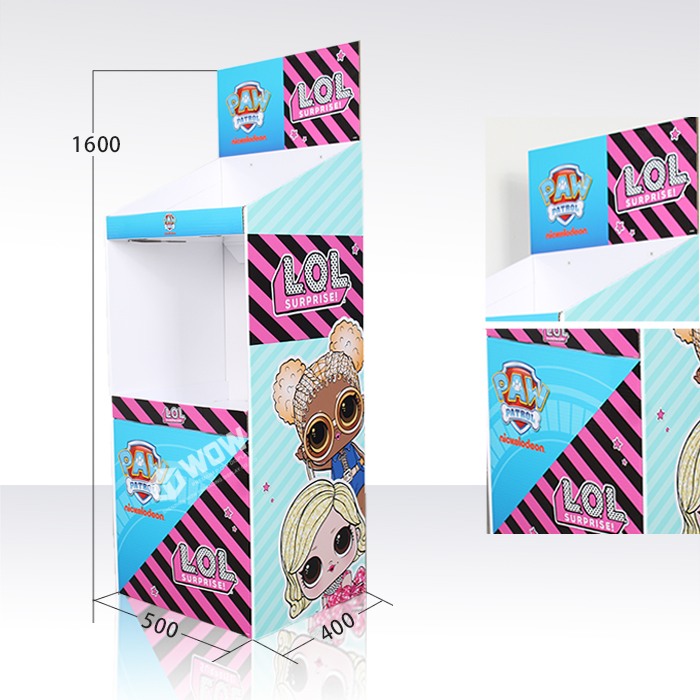
The fifth is assembly and logistics. Displays must not only look good; they must also ship efficiently, assemble easily, and hold products safely. WOW Display’s order process and service messaging emphasize concept design, structural design, prototyping, manufacturing, co-packing, and shipment support, which reflects how important execution is in real retail display programs.
Whether you choose POP or POS, customization is what makes the display more effective.
A custom display can be matched to your exact product dimensions, branding, color palette, retail guidelines, and sales objectives. It can also be engineered for the right product load, the right number of SKUs, and the right store footprint.
WOW Display positions customization as a core strength, offering custom retail display solutions across multiple structures and materials. Its site highlights design support, branding flexibility, and manufacturing capabilities for brands seeking tailored merchandising solutions rather than generic off-the-shelf fixtures.
For B2B buyers, this matters because a generic display may hold products, but a custom display is far more likely to support real sales performance.
So, POP display vs POS display: which is better for retail promotion?
The most accurate answer is this:
POP displays are better for broad in-store visibility and product discovery, while POS displays are better for last-minute checkout conversions.
If you need stronger retail presence, more storytelling space, and a display that influences customers earlier in the buying process, choose a POP display. If you need a compact, efficient fixture that encourages impulse purchases near checkout, choose a POS display.
For many brands, the smartest retail strategy is not POP or POS alone, but a coordinated combination of both. By using each display type where it performs best, retailers and brands can improve visibility, increase engagement, and drive stronger overall promotion results.
As a custom retail display manufacturer, WOW Display already structures its offering around this full-spectrum approach, covering both POP and POS display solutions, multiple structural formats, and multiple material choices for different retail needs.
If your business is planning a retail launch, seasonal campaign, or branded store promotion, selecting the right display type could make a measurable difference in sales performance.


3/F No. 6 Hedi Road, Gongming Street, Guangming District, Shenzhen City, GD, China, 518106


