
Walk through any modern supermarket or retail chain, and one thing becomes immediately clear: the competition for shopper attention is intense. Shelves are crowded, product choices are overwhelming, and consumers make decisions quickly—often within seconds. In this environment, POP Displays (Point of Purchase Displays) have become one of the most powerful tools brands use to influence purchasing behavior directly at the retail floor.
Research on the development of POP advertising design shows that retail displays have evolved far beyond simple signage. Today’s point of purchase display systems integrate visual storytelling, interactive engagement, and digital amplification to create a memorable shopping experience. As retail environments become increasingly competitive, brands are investing more in custom POP displays to differentiate themselves and increase product visibility.
This article explores the key trends shaping modern POP display design and explains how innovative retail installations are edefining in-store marketing.
A POP display, also known as a point of purchase display, is a promotional structure placed near products inside a retail environment to attract customer attention and encourage purchases. These displays are typically positioned in high-traffic areas such as:
aisle intersections
store entrances
checkout zones
promotional endcaps
POP displays combine product storage with marketing visuals, helping shoppers quickly understand product features and promotions.
The effectiveness of POP displays lies in their ability to communicate instantly. When shoppers browse store aisles, they rarely spend long evaluating each product. Instead, they respond to visual cues such as color, lighting, and display design.
Well-designed POP Displays help brands achieve several goals at once:
increase product visibility
highlight promotions or new launches
reinforce brand identity
encourage impulse purchases
Because these displays operate directly at the point of purchase, they have a measurable impact on retail sales.
One important shift in retail marketing is the growing use of series-based POP Displays rather than single promotional units.
Traditionally, many brands relied on one stand-alone display to promote a product. But today’s retail strategies often involve coordinated display systems that extend across multiple locations in the store. These systems may include:
hanging signage
shelf talkers
digital screens
promotional islands
By creating a consistent visual identity across multiple retail touchpoints, brands can dramatically increase recognition and shopper recall.
Series-based POP displays also allow retailers to build thematic experiences. Seasonal promotions, limited-edition launches, or product family campaigns often benefit from a unified design language that reinforces the brand story.
Another major trend is the integration of advertising with product presentation.
Rather than separating promotional messaging from merchandise, modern point of purchase display structures combine product storage, visual graphics, and brand messaging into a single cohesive unit.
This approach reduces the cognitive effort required for shoppers. When consumers can instantly see:
the product
its benefits
its price
and its brand identity
they are far more likely to make a purchase decision quickly.
For example, beverage brands frequently integrate shelving systems directly into their custom POP displays, allowing shoppers to grab products without leaving the promotional zone.
Retail psychology research shows that when product information is clearly communicated at the shelf, conversion rates can increase by 20–30% compared to standard shelf placement.

Modern POP Displays increasingly incorporate advanced materials and lighting technology to create a stronger visual impact.
LED lighting, motion sensors, and digital screens are now commonly integrated into retail installations. These elements help transform traditional displays into eye-catching focal points within the store.
Case Study: Illuminated Beverage POP Display
The display features an oversized graphic panel showcasing two large beverage cans, surrounded by vibrant neon-style LED outlines. The design uses bright citrus imagery—lime slices and chili peppers—to visually communicate flavor characteristics.
Several design strategies make this point of purchase display highly effective:
1. Strong vertical presence
The tall structure rises above surrounding shelves, making it visible from a distance within the supermarket.
2. Integrated product shelving
Actual beverage cans are arranged on side shelves and at the base of the display, ensuring easy product access.
3. LED lighting accents
The illuminated outlines around the product images create a glowing effect that attracts attention even in a brightly lit retail environment.
4. Flavor storytelling
Visual elements such as citrus slices and chili peppers reinforce the drink’s flavor profile and help shoppers understand the product instantly.
This type of custom POP display combines branding, product storage, and lighting technology to create a visually engaging promotional centerpiece.
Another emerging trend in retail display design is the focus on experiential marketing.
Consumers increasingly respond to displays that allow them to engage with the brand rather than simply observe it.
Experiential POP displays may include:
sampling stations
touch-activated lighting
augmented reality experiences
QR code promotions
social media campaigns
When shoppers interact with a display, they are more likely to remember the product and share their experience with others.
Retail analytics studies suggest that interactive displays can increase shopper dwell time by up to 40%, significantly improving the likelihood of purchase.
In addition to interactive elements, many brands are adopting event-based display strategies.
These displays are designed around specific occasions, seasonal themes, or cultural moments that resonate with shoppers.
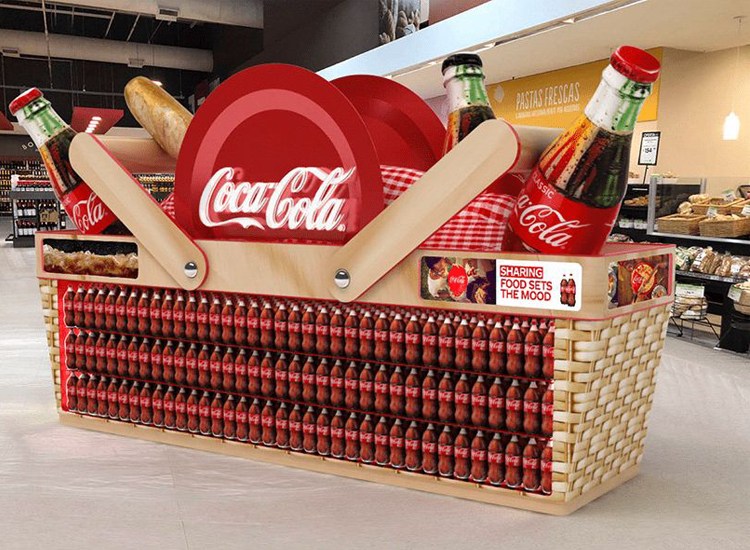
Case Study: Coca-Cola Picnic-Themed Display
This large promotional installation resembles a giant picnic basket filled with Coca-Cola bottles. The display features oversized picnic elements, including a woven basket structure, large bottle graphics, and decorative plates.
Several features contribute to the effectiveness of this point of purchase display:
1. Immersive thematic design
The picnic concept reinforces the emotional message associated with sharing beverages during social gatherings.
2. High product capacity
Hundreds of bottles are integrated into the display structure, ensuring strong inventory availability during promotional campaigns.
3. Oversized visual props
Large bottles and picnic accessories create an attention-grabbing installation that stands out in the retail environment.
4. Brand storytelling
The display communicates a lifestyle narrative—sharing food and drinks with friends—which strengthens the brand’s emotional connection with shoppers.
This kind of custom POP display transforms a retail promotion into an engaging brand experience.
Although POP advertising traditionally exists inside physical stores, its influence now extends beyond the retail floor.
Many brands design POP displays that encourage shoppers to engage online. QR codes, promotional hashtags, and digital campaigns connect physical retail experiences with social media platforms.
This hybrid strategy allows brands to:
increase online visibility
encourage user-generated content
extend campaign reach beyond the store
The result is a powerful integration of offline merchandising and online marketing.
Standard shelving rarely attracts attention in crowded retail environments. This is why many brands choose custom POP displays designed specifically for their products and marketing objectives.
Custom display systems allow companies to:
create stronger visual differentiation
communicate brand stories more effectively
highlight new product launches
optimize product placement
For beverage brands, cosmetics companies, and consumer packaged goods manufacturers, these displays often become the centerpiece of promotional campaigns.
When strategically designed, a point of purchase display can significantly increase both product visibility and sales performance.
As retail continues to evolve, POP display design will likely incorporate even more advanced technologies and experiential elements.
Future developments may include:
AI-powered shopper analytics
digital price synchronization
personalized display messaging
augmented reality product demonstrations
However, the core purpose of POP Displays will remain the same: influencing purchasing decisions at the exact moment when consumers are ready to buy.
The most successful retail brands understand that the store itself is a marketing platform. By combining creative design, interactive experiences, and strategic placement, custom POP displays will continue to play a central role in retail marketing for years to come.
FAQ About POP Displays
1.What is a point of purchase display?
A point of purchase display is a retail marketing structure placed near products in stores to attract customer attention and encourage immediate purchases. These displays often feature product shelving, promotional graphics, and branding elements.
2.Why are POP Displays important for retail marketing?
POP Displays influence shoppers at the moment they make purchasing decisions. Since many buying choices occur inside the store, a well-designed display can significantly increase product visibility and boost impulse sales.
3.What materials are commonly used for custom POP displays?
Custom POP displays are typically made from materials such as:
corrugated cardboard
acrylic
metal
wood
plastic thermoformed panels
The choice of material depends on the campaign duration, product weight, and brand positioning.
4.How long do POP displays stay in stores?
Temporary POP Displays used for seasonal promotions usually remain in stores for 4–12 weeks, while permanent displays made from durable materials can stay in retail environments for several months or longer.
5.How can brands design effective POP Displays?
Successful POP Displays focus on several key elements:
strong visual impact
clear product messaging
easy product accessibility
durable construction
integration with broader marketing campaigns
Working with experienced display manufacturers can ensure the display meets both design and functional requirements.


3/F No. 6 Hedi Road, Gongming Street, Guangming District, Shenzhen City, GD, China, 518106


