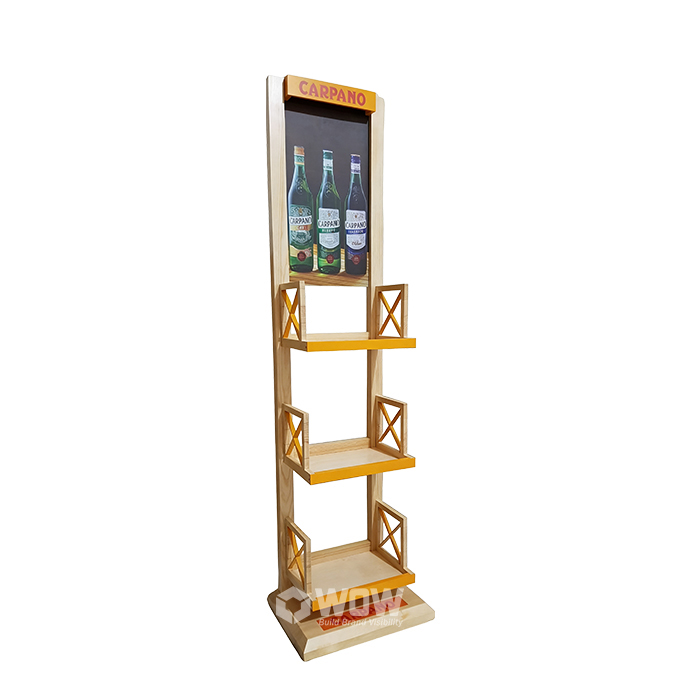
If you’re prepping for a product launch in US or European supermarkets, your inbox has likely seen this blunt request from retail buyers: "We need your POP displays to be FSC-certified."
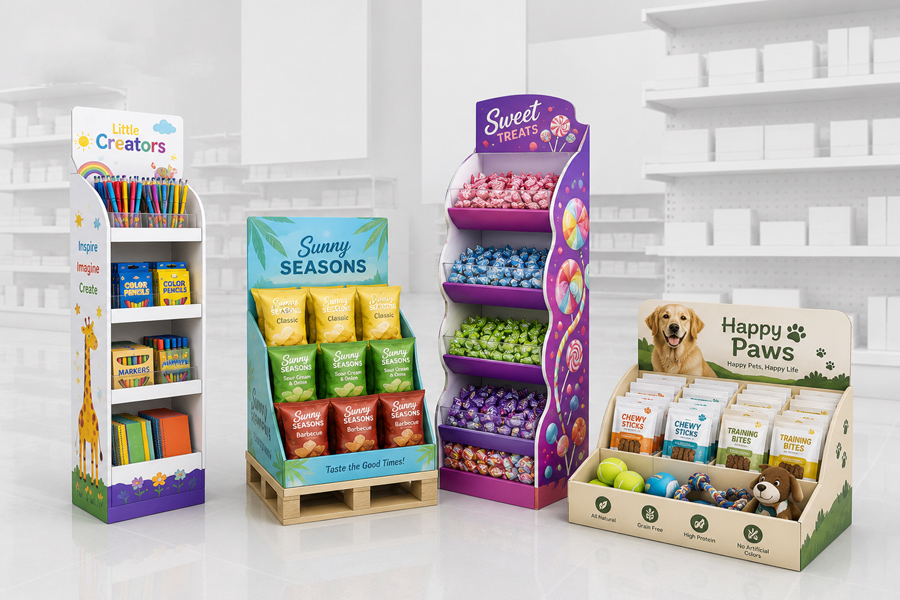
It used to be that a cardboard display only had to pass two tests: Does it look sharp? and Can it hold the weight without collapsing?
Not anymore. Today, retail giants like Walmart, Costco, and Aldi are scrutinizing the paper itself.
Is this just corporate fluff, or a strict rule that could get your goods rejected? Skipping the "save the planet" talk, here is the real, bottom-line reason your overseas buyers are demanding that little green tree logo—and what it means for your budget and compliance.
If you are shipping retail displays or packaging to markets in Europe or North America, you have likely noticed a new, non-negotiable requirement in your compliance paperwork: FSC Certification.
FSC stands for the Forest Stewardship Council. It is the gold standard in forest management certification. When a cardboard display, a paper box, or any wood-based product is "FSC-certified," it means the materials have been tracked through the entire supply chain—from the responsibly managed forest to the printing factory—ensuring that the wood pulp was harvested in an environmentally and socially responsible manner. It is not just about "saving trees"; it is about verifying the chain of custody.
This isn't a passing trend; it is a fundamental shift in how global retail giants operate. Here is why your clients are suddenly demanding it:
The "Net-Zero" Mandate: Major retailers (like Walmart, Target, or European supermarket chains) have made public commitments to hit sustainability targets. They are now auditing their entire supply chain, including the cardboard displays used for product launches, to ensure they aren't contributing to deforestation.
Consumer Pressure: Shoppers in Western markets are increasingly "label-conscious." They look for the little FSC checkmark logo on packaging. For a retailer, stocking products in non-certified, "guilt-heavy" packaging is a PR liability that can lead to boycotts or negative social media attention.
Regulatory Compliance: New laws—particularly in the EU, such as the EU Deforestation Regulation (EUDR)—are making it illegal to sell products linked to deforestation. Retailers are shifting the burden of compliance onto their suppliers to protect themselves from heavy fines.
The "Responsible Brand" Image: Retailers now view packaging as an extension of their brand values. Using FSC-certified cardboard sends a clear message to the consumer: We care about the planet. It turns your display into a marketing asset, rather than just waste.
Ignoring sustainability compliance is no longer just a "green" issue—it is a massive financial and legal risk. If your cardboard displays or packaging lack the necessary certifications (like FSC), you aren't just missing out on a few contracts; you are staring down the barrel of severe penalties that can effectively lock you out of key Western markets.
In the EU, the EU Deforestation Regulation (EUDR) has changed the rules of the game. Retailers and their suppliers can be hit with fines reaching up to 4% of their annual turnover if they cannot prove their products are deforestation-free.
For you as a supplier, this means if your display triggers a compliance audit, the retailer will not hesitate to:
Charge you back for the entire cost of the display recall.
Cancel outstanding orders immediately to mitigate their own risk.
Withhold payments while they navigate the legal fallout of the non-compliant shipment.
The US and EU customs authorities are increasingly using "green-tech" to screen imports. If your paperwork doesn’t align with international sustainability standards, your containers can be flagged for inspection.
Banned Entry: If a shipment is found to contain non-compliant materials, it may be seized, destroyed, or forced to be shipped back at your expense.
The Blacklist: Once your company is flagged for a compliance violation, you face a heightened risk of recurring audits. Your future shipments will undergo more rigorous—and costly—inspections, creating delays that destroy the time-sensitive nature of retail product launches.
Beyond the fines, the ultimate risk is brand toxicity. In the US and EU, retailers share "risk lists." If your company is identified as the source of non-compliant, "environmentally damaging" displays, word travels fast. Being labeled a high-risk supplier can lead to a long-term "vendor ban" across entire retail chains, regardless of how good your pricing or design might be.
The Bottom Line:Compliance is now a critical part of your product’s "structural integrity." A beautiful, cost-effective display is worth nothing if it becomes a legal liability the moment it hits a foreign port. Don't let a missing certificate shut down your supply chain.
For brand marketing managers, the "sustainability" conversation has moved from the boardroom to the sales floor. It is no longer just a corporate social responsibility (CSR) bullet point—it is a mandatory checklist item for every retail display procurement.
Marketing managers are under immense pressure to deliver high-visibility product launches that don't generate PR backlash. When they evaluate a display project, they are effectively conducting a Risk vs. Impact analysis. An FSC-certified display isn't just about the cardboard; it’s about "clean" marketing. If a brand manager launches a major campaign only to have it criticized by eco-conscious shoppers for using "unsustainable, deforestation-linked packaging," the entire marketing budget—and their reputation—is at risk.
When a display carries the FSC logo or sustainability certification, it changes how the brand manager talks about their product:
Narrative Power: It provides a clear, credible story to tell the consumer. "Our product is eco-friendly, and so is the display it sits on."
Retailer Buy-in: Many major retailers now prioritize vendors who solve their own compliance headaches. If a marketing manager presents a display plan that comes with full FSC documentation, they are making the retailer's life easier. That is a massive competitive advantage.
Avoiding "Greenwashing" Accusations: Modern consumers are experts at sniffing out fake environmental claims. An FSC certification provides the third-party verification needed to prove the brand's commitment is genuine, not just a marketing gimmick.
Brand managers are no longer looking for "a cardboard box company." They are looking for compliance-ready partners. If you can provide FSC-certified materials, you are signaling that you understand the modern retail landscape. You aren't just selling a display; you are selling the peace of mind that their campaign won't be derailed by regulatory failures or public scrutiny.
Many suppliers will tell you they are "FSC-friendly" or "follow FSC standards," but in the world of global compliance, there is no such thing as being "kind of" certified. If they do not have a valid Chain of Custody (CoC) certificate, your display is not FSC-certified.
Don't rely on a photocopy of a certificate—certificates can be forged or expired. Here is the professional way to verify your manufacturer's credentials:
The only source of truth is the
Step 1: Ask your supplier for their FSC Certificate Code (usually in the format XXX-COC-XXXXXX).
Step 2: Enter the code into the FSC database.
Step 3: Check the status. It must say "Valid." If it says "Expired," "Terminated," or "Suspended," the supplier is currently non-compliant.
A factory might have an FSC certificate for one specific department or for trading paper products, but not for corrugated cardboard production.
Look for the "Product Scope" in the database entry.
Ensure that the scope includes categories like "Packaging and paper" or "Corrugated paper packaging." If their scope doesn't cover your product type, their certification is useless for your project.
This is the most common mistake. Even if the factory has a valid certificate, your shipment is not FSC-certified unless:
The manufacturer explicitly includes the FSC claim and their certificate code on the commercial invoice for your specific order.
If the invoice does not state "FSC Mix" or "FSC Recycled" along with their license code, you have no way to prove to your client (or customs) that this specific batch of cardboard came from a certified source.
If they claim they are printing the FSC logo on your displays, they are legally required to provide you with the documentation showing that the paper source was tracked. If they hesitate to share their certificate details or give you excuses about "confidentiality," it is a major red flag.
FSC certification is now a mandatory requirement for entering US and European retail markets. Due to strict regulations like the EUDR, non-compliant displays face border seizures, destruction, and fines of up to 4% of annual turnover.
Don't just trust a supplier's word. Verify their Chain of Custody on the official FSC database, ensure their scope covers corrugated packaging, and demand the FSC claim and license code on your final commercial invoice.
At wowpopdisplay, we provide fully verifiable, FSC-certified solutions. We handle the compliance documentation so your launch clears customs without delay. Visit us at to secure your retail presence.
It guarantees that wood and paper materials are sourced from responsibly managed forests. It uses a "Chain of Custody" (CoC)—a verified audit trail—to ensure the material remains certified from the forest to the final display.
Regulatory Compliance: New laws (like EUDR) mandate strict proof against deforestation. FSC documentation provides the required evidence.
Preventing Greenwashing: Buyers need independent, third-party proof to avoid backlash from eco-conscious consumers and regulators.
ESG Commitments: Major retailers have public sustainability goals; they can only meet them by sourcing certified products.
Higher Entry Barrier: Many premium brands will only work with FSC-certified suppliers.
Instant Credibility: The FSC logo is globally recognized and signals that your factory meets international ethical and environmental standards.
Competitive Edge: It allows your clients to highlight sustainability, making your displays a more attractive choice for their retail partners.
Your Valid FSC CoC Certificate: Including your unique license code.
Compliant Documentation: Invoices or packing slips that clearly mark materials as "FSC-certified."
Correct Logo Usage: Any on-display branding must adhere to official FSC trademark guidelines.


3/F No. 6 Hedi Road, Gongming Street, Guangming District, Shenzhen City, GD, China, 518106