
Choosing the right POP display is essential for attracting customer attention and boosting in-store sales. The right display not only showcases your product effectively but also aligns with your retail goals, helping you stand out in a competitive shopping environment.
In this guide, we will walk you through the key factors to consider so you can make a more informed and effective decision.
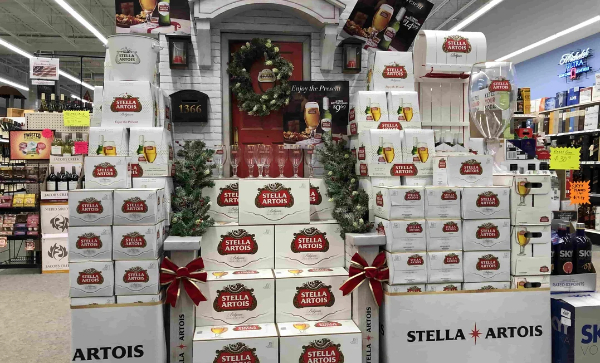
Before choosing a POP display, you should first understand your product characteristics and retail objectives. Different products require different display solutions based on factors such as size, weight, packaging, and target audience.
For example, lightweight products like snacks, cosmetics, and small accessories are often suitable for cardboard countertop displays, while heavier products may require stronger metal or wooden floor displays for better durability and stability.
Your retail goals also play an important role in selecting the right POP display. Some brands use POP displays to encourage impulse purchases near checkout counters, while others focus on improving brand visibility during product launches or seasonal promotions.
In many cases, retailers also want POP displays to:
Increase product visibility
Improve customer engagement
Maximize limited retail space
Support seasonal marketing campaigns
Create a better shopping experience
By clearly understanding both your product requirements and marketing goals, you can choose a POP display that not only attracts customer attention but also improves retail performance and supports long-term brand growth.
Selecting the right type of POP display is crucial because different display structures serve different retail purposes.
Floor displays are ideal for high-traffic areas and large product promotions, helping brands attract attention from a distance. Countertop displays are better suited for small, lightweight products placed near checkout counters, where they can encourage impulse purchases.
Pallet displays are commonly used in warehouse-style retail environments for bulk promotions, while sidekick and endcap displays are designed to maximize visibility in narrow aisles or premium shelf positions.
Choosing the right format depends on how and where your product will be placed in-store. When the display type matches your retail strategy, it becomes much easier to improve visibility, increase customer interaction, and drive higher sales performance.
Choosing the right material for your POP display directly affects its durability, cost, appearance, and overall performance in retail environments. Each material has its own advantages depending on the product type, budget, and usage scenario.
Below is a simple comparison to help you understand the most common POP display materials:
Material | Advantages | Best Use Case |
Cardboard | Low cost, lightweight, easy to customize | Short-term promotions, FMCG products |
Acrylic | Clear, modern look, strong visual appeal | Cosmetics, electronics, premium products |
Metal | Very durable, high load capacity | Heavy products, long-term retail use |
Wood | Premium feel, strong structure | Luxury brands, high-end retail displays |
Cardboard displays are widely used for seasonal campaigns due to their cost efficiency and flexibility. Acrylic displays provide a clean and modern presentation, making them ideal for brands that want a premium look. Metal displays are best for heavier products that require strong support, while wooden displays are often used by high-end brands to create a more natural and luxurious retail experience.
By selecting the right material based on your product and retail goals, you can ensure your POP display not only looks appealing but also performs effectively in real retail environments.
Where your POP display is placed inside a store has a major impact on how effectively it attracts attention and drives sales. Even a well-designed display can underperform if it is not positioned in a high-visibility or high-traffic area.
Entrance area:Customers are highly alert and more open to new products. This is ideal for eye-catching POP displays that quickly grab attention and build first impressions.
Checkout counter:Customers are in a fast decision-making mindset. Small countertop POP displays work best here to trigger impulse purchases.
Aisle sections:Customers are comparing different products. Sidekick or shelf displays should focus on highlighting key product benefits clearly and quickly.
End cap positions:These are high-visibility hotspots at the end of aisles. They are commonly used for promotions, seasonal campaigns, or new product launches.
By understanding how customers move and make decisions in-store, you can place your POP display more strategically. When placement aligns with real shopping behavior, your product becomes more visible, more engaging, and more likely to convert into sales.
A POP display is more than just a product holder—it is a direct representation of your brand in a retail environment. Strong visual design can quickly capture customer attention and influence how your product is perceived within seconds.
Consistent use of brand colors helps create instant recognition and makes your display stand out among competing products. A clear and visible logo placement ensures customers can immediately identify your brand even from a distance.
Product messaging should be simple and focused on key selling points such as “new arrival,” “best seller,” or “limited offer,” rather than long descriptions. At the same time, product images and promotional elements should be designed with a clear visual hierarchy so that the most important information naturally draws attention first.
When branding and visual impact are well executed, your POP display not only attracts attention but also strengthens brand recall and increases the likelihood of purchase.
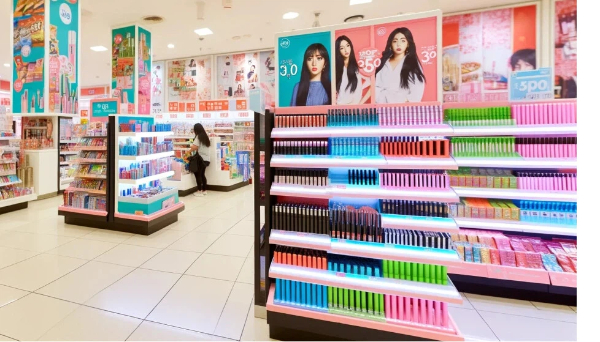
When selecting a POP display, it is important to balance durability, cost, and production time, as these three factors directly affect both retail performance and project efficiency.
Durability is a key consideration because it determines how well the display can withstand in-store handling, transportation, and long-term product loading. For short-term promotions, lightweight cardboard displays may be sufficient, while long-term or heavy-product applications may require stronger materials such as metal or reinforced structures.
Cost also plays a major role in decision-making. More complex designs, premium materials, and high-end printing will increase the overall budget, while simpler cardboard solutions are more cost-effective for large-scale promotional campaigns.
Production time should not be overlooked, especially for time-sensitive product launches or seasonal campaigns. Custom POP displays typically require time for design, sampling, and mass production, so planning ahead is essential to avoid delays in retail rollout.
By carefully evaluating these three factors together, brands can choose a POP display that meets both marketing expectations and operational requirements without compromising efficiency.
Choosing the right POP display is not only about design or material—it also depends heavily on the manufacturer you work with. An experienced POP display manufacturer can help you turn your idea into a practical retail solution, ensuring the structure, printing quality, and production process all meet real store requirements.
A professional manufacturer can provide end-to-end support, including structural design, prototyping, material selection, and mass production. This is especially important for brands that need to meet strict retail standards such as Walmart or Costco compliance, where stability, packaging, and delivery efficiency all matter.
Working with an experienced partner also helps reduce risks such as design errors, production delays, or quality issues. It ensures your POP display not only looks good but also performs reliably in real retail environments.
For example, companies like WOW Display specialize in custom POP and POS display manufacturing, offering full in-house production and experience working with global brands across different retail channels. This kind of expertise can help brands launch faster, maintain quality consistency, and achieve better in-store performance.


3/F No. 6 Hedi Road, Gongming Street, Guangming District, Shenzhen City, GD, China, 518106


