
In a self-service retail store, most buying decisions happen without a salesperson standing nearby. Shoppers walk through aisles, compare similar products, check prices, notice promotions, and make quick decisions based on what they see in front of them.
This is where a POP display becomes more than a product holder.
A well-designed point of purchase display can remind shoppers of a promotion, explain a product benefit, create a stronger brand impression, and encourage a final buying decision at the exact moment when the customer is close to the product. In that sense, a modern POP display works like a silent salesperson inside the store.
It speaks through structure, color, product placement, graphics, shape, and retail positioning. It does not interrupt the shopper. It does not need a sales pitch. Instead, it gives the product a stronger voice at the point of purchase.
For brands competing in supermarkets, convenience stores, pharmacies, club stores, and specialty retail spaces, this silent selling function is one of the main reasons why POP displays still matter.
POP comes from point of purchase advertising, which refers to promotional communication placed close to where the shopper makes a purchase decision. In traditional retail theory, POP advertising covers a wide range of in-store media, including posters, signage, product displays, promotional counters, shelf communication, and branded display structures.
Modern retail has pushed this idea further.
Today, a POP display is not only an advertising surface. It is often a complete retail merchandising tool that combines product holding, brand communication, promotional messaging, and store execution in one structure.
A custom POP display may be designed as a floor stand, counter display, pallet display, sidekick display, dump bin, themed island display, or mixed-material retail fixture. Some are made for short-term seasonal campaigns. Others are built for longer retail programs where strength, durability, and repeated use matter more.
The key point is simple: a modern point of purchase display should not only look attractive. It should help the shopper understand the product faster, make the product easier to notice, and support the brand’s sales goal in the store environment.
Many shoppers do not make all purchase decisions before entering a store. Even when they have a shopping list, they may change brands, add extra items, respond to a promotion, or try a new product after seeing it in the aisle.
A retail POP display is designed for this final buying moment.
It works close to the product, close to the shelf, and close to the shopper’s decision path. That makes it different from general advertising. A billboard, online ad, or catalog may create awareness before the store visit. A point of purchase display influences the shopper when the product is already within reach.
In many retail stores, especially supermarkets and chain stores, customers browse independently. They may not ask staff about product details. They may not spend much time reading long packaging information.
A good POP display helps answer basic questions quickly:
What is being promoted?
What is new?
Why is this product worth noticing?
Is there a seasonal offer or special campaign?
How can the shopper pick up the product easily?
This is especially useful for new products, limited-edition packaging, product bundles, and seasonal campaigns. The display gives the product a stronger communication point without depending on store staff.
Most retail shelves are visually crowded. Products compete with similar colors, similar packaging, and similar price tags. If a product stays only on the regular shelf, it may be overlooked.
A custom POP display helps break that pattern.
It can use a larger visual area, special structure, stronger color contrast, a themed shape, or a different product presentation angle to make shoppers pause. This stopping power is important because attention often comes before interest, and interest often comes before purchase.
However, visual impact must be controlled. A display that is too complicated may attract attention but fail to communicate the product clearly. The most effective POP display design uses creativity to support product visibility, not to cover it.
Attractive design alone is not enough. The display also needs to help the shopper move from interest to action.
This means the product should be easy to see, easy to understand, and easy to take. If the display blocks the product, hides the packaging, makes replenishment difficult, or requires the shopper to search too much, the selling function becomes weaker.
An effective point of purchase display should guide the shopper naturally:
1. Notice the display
2. Recognize the product or brand
3. Understand the promotion or product value
4. Pick up the product without hesitation
That is why POP display design needs both creative thinking and practical retail engineering.
The idea of a POP display as a “silent salesperson” is especially relevant in self-service retail environments. A salesperson usually explains, recommends, reminds, and encourages. A POP display has to do these things visually.
A strong display can tell shoppers:
This product is worth noticing.
This product belongs to a special campaign.
This product is easy to buy now.
This product is connected to a brand experience.
This product has a clear reason to be chosen.
The best POP displays do not simply hold products. They create a small sales conversation without words.
For example, a beverage display may use a vehicle-shaped structure to suggest delivery, movement, refreshment, or brand energy. A beauty display may use clean acrylic and lighting to suggest premium quality. A snack display may use bright graphics and easy-access trays to support quick impulse purchase.
The display structure becomes part of the message.
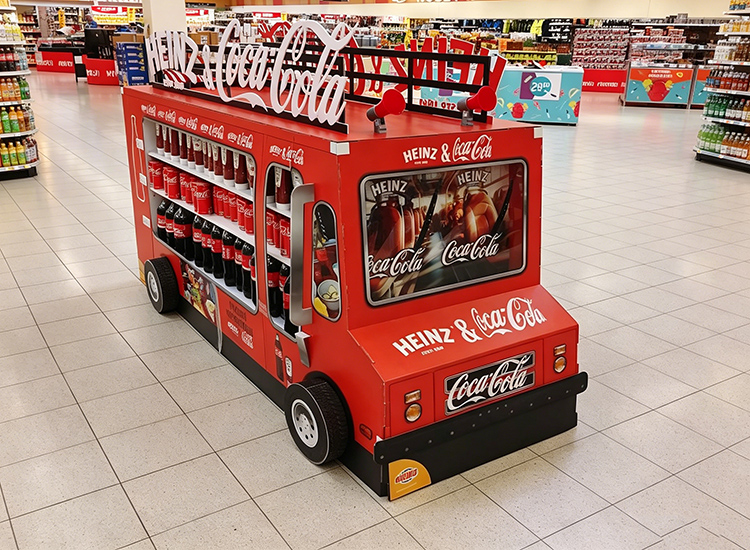
A vehicle-shaped POP display can act as both a product holder and a silent salesperson, combining brand recognition, product visibility, and retail storytelling at the point of purchase.
A vehicle-shaped POP display is a good example of how structure can communicate before the shopper reads any details. The display immediately feels different from a standard shelf. It creates a branded retail scene, gives the products a stronger visual position, and encourages shoppers to stop.
For beverage and food brands, this type of themed structure can be useful when the campaign needs more than simple product storage. It can support co-branded promotions, seasonal campaigns, product launches, or high-traffic supermarket displays.
But the creative shape still has to serve the product. The shelves must hold the product securely. The products should remain visible from different angles. The structure should fit the store space. Store staff should be able to replenish it without difficulty.
That is the difference between a decorative display and a working POP display.
Traditional advertising often communicates from a distance. A poster may tell people about a product. A video ad may create brand awareness. A social media campaign may generate interest before the customer arrives in store.
A modern POP display works at a different moment.
It communicates when the shopper is physically close to the product. That makes its job more direct and more demanding. It must attract attention, present the product, support the sales message, and survive real retail handling.
In modern retail campaigns, the display is no longer just a place to paste graphics. The structure itself can become the advertising medium.
A display shaped like a car, truck, bottle, gift box, house, or racing scene can carry a brand message through form. This is especially valuable for food, beverage, toy, beauty, pet product, and seasonal retail campaigns.
A themed POP display can make the product feel connected to an experience, not just a shelf position.
POP displays can take many forms. They can be small counter displays, large floor displays, sidekick displays, pallet displays, or full promotional islands. This flexibility is one of their strengths.
But flexibility can also create a problem.
Some displays become too busy. Too many colors, too many messages, too many shapes, or too many product sections can weaken the shopper’s understanding. A display may look impressive at first glance but fail to answer the most important question: what should the shopper buy?
A focused POP display should keep three things clear:Brand identity,Product visibility,Purchase message
If the display cannot make these three points obvious, the design needs to be simplified.
Although POP displays often appear at the final stage of a retail campaign, they should not be planned at the last minute.
A production-ready display depends on many details: Product size/ Product weight/Packaging format/Number of SKUs/Store placement/Promotion period/ Material choice/Assembly method/ Shipping method/Retailer requirements
If these details are confirmed too late, the display may look good in the concept stage but become difficult to produce, ship, assemble, or replenish.
For custom POP display projects, early planning is not optional. It is what makes the display practical.
One of the strongest functions of a POP display is its ability to create atmosphere inside the store
A regular shelf presents products. A themed POP display can turn the same products into a small campaign environment.
This is especially useful for:
Seasonal retail campaigns
Holiday campaigns
New product launches
Co-branded promotions
Gift pack displays
Supermarket activity zones
Large traffic-area displays
When shoppers see a themed display, they are not only seeing products. They are seeing a retail event. This can make the promotion feel more active, more memorable, and more different from surrounding shelf displays.
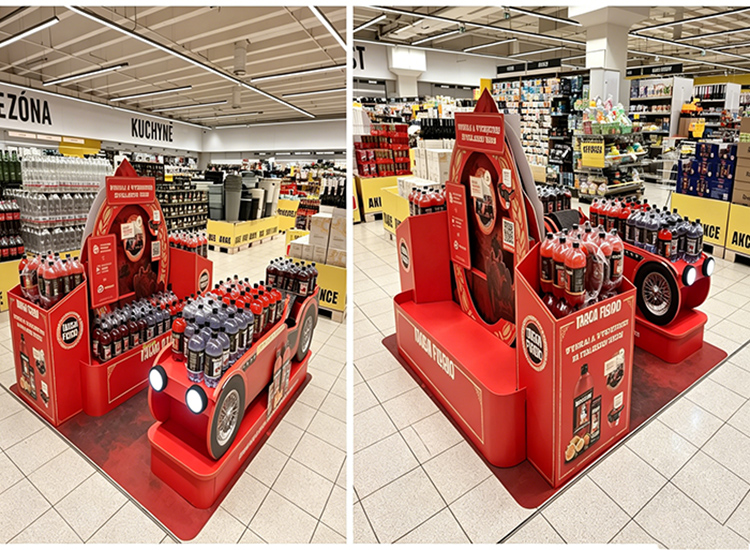
A racing-themed POP display can turn a beverage promotion into an in-store campaign scene, but the structure must balance visual impact, product load, store space, and easy replenishment.
The racing-themed beverage display shows how a POP display can build a stronger promotional atmosphere. The car shape, red color, campaign graphics, and product arrangement work together to create an event-like retail presentation.
This type of display is not only about holding bottles. It gives shoppers a reason to look, stop, and connect the product with a campaign story.
For beverage brands, a themed island display can work well in supermarkets, hypermarkets, club stores, and promotional areas where the goal is to build strong visibility. It can also support prize campaigns, tasting events, holiday promotions, or limited-time sales programs.
However, large themed displays need careful planning. The product load may be heavy. The structure needs enough stability. The display must not block traffic flow. It should allow quick replenishment. It also needs efficient packing and transportation, especially for multi-store rollout projects.
A good themed POP display is never only about creativity. It must also work in the store.
A custom POP display needs both visual design and structural thinking. If one side is missing, the final result may fail in real retail use.
A beautiful display that cannot carry product weight is not practical. A strong display that hides the product is not effective. A low-cost display that arrives damaged is not successful. A creative display that store staff cannot assemble properly will not perform as expected.
This is why practical design details should be considered from the beginning.
The product should guide the structure.
Before choosing a display shape, the design team should understand:
How heavy each product is
How many units will be placed on the display
Whether the product is boxed, bottled, bagged, or hanging
Whether the display needs shelves, hooks, trays, or bins
Whether the structure needs reinforcement
Whether the display will be shipped flat or pre-packed
For lightweight products, a cardboard POP display may be enough. For heavier products, the design may require reinforced corrugated board, PVC, metal support, wood structure, or mixed materials.
The goal is not to choose the strongest material every time. The goal is to choose the right structure for the product, promotion period, store environment, and budget.
A POP display does not stand in an empty showroom. It stands in a real store with shoppers, carts, shelves, staff, and space limits.
Store placement affects the design.
A display placed in a main aisle may need a narrow and stable structure. A pallet display in a club store may need high product capacity. A sidekick display near a shelf may need to avoid blocking traffic. A counter display near checkout must stay compact and easy to shop.
Before production, brands should confirm where the display will be used and how shoppers will move around it.
If traffic flow is ignored, even a visually strong display may become a problem for retailers.
Branding is important, but the product still needs to remain the hero.
A common mistake is using too much graphic space and leaving too little product visibility. Another mistake is adding long promotional text that shoppers will not read in a busy aisle.
For most POP displays, the message should be short and clear:
Brand name
Product category
Campaign theme
One key selling point
Simple call-to-action if needed
The structure should also protect the product’s own packaging design. If the display covers the product label or makes the SKU difficult to identify, the shopper may lose interest.
A POP display does not only need to look good in a rendering. It must also be packed, shipped, assembled, filled, and maintained.
Important questions include:
Can the display be flat-packed?
Does it need tools for assembly?
Can store staff set it up quickly?
Will the display be damaged during shipping?
Can the product be replenished easily?
Does the packaging protect printed surfaces?
Is the carton size efficient for international shipping?
For global retail campaigns, these details affect cost, timing, and store execution. A well-designed POP display should be production-ready, not just visually attractive.
Not every creative display performs well in store. Some designs look impressive in concept but create problems during production or retail execution.
Here are several common mistakes brands should avoid.
Designing Only for Visual Impact
A bold shape can attract shoppers, but it should not make the product hard to see or hard to buy. Visual impact should support sales, not replace function.
Using Too Much Text
Shoppers usually do not stop to read long messages in a supermarket aisle. A POP display should communicate quickly. Short headlines, clear graphics, and visible products are usually more effective than heavy copy.
Choosing the Structure Before Confirming Product Weight
Structure should follow product data. If the weight is underestimated, shelves may bend, hooks may fail, or the whole display may become unstable.
Making the Display Too Large for the Store
Large displays can create strong impact, but they need enough retail space. If the display blocks traffic, hides other products, or makes replenishment difficult, retailers may reject it.
Treating the Display as Decoration
A POP display is not only decoration. It is a retail sales tool. Every design decision should support product visibility, shopper access, brand message, and store execution.
At WOW Display, we develop custom POP display solutions for brands that need practical, production-ready retail displays. Our work covers concept development, structural design, material selection, 3D rendering, prototyping, printing, manufacturing, packing, and delivery.
We support different materials, including cardboard, acrylic, metal, wood, PVC, and mixed-material structures. This allows us to recommend a display solution based on the product’s weight, promotion period, brand positioning, retail channel, and shipping requirements.
For themed POP displays, our team can help balance creative appearance with real production needs. Whether the concept is a vehicle-shaped display, a racing-themed beverage display, a seasonal island display, or a compact retail promotion stand, the final structure must be attractive, stable, easy to use, and suitable for store execution.
If you are planning a custom POP display for a retail campaign, you can share your product details, campaign idea, store placement, and expected quantity with our team. We can help turn the concept into a practical display solution from design to production.
Conclusion: A Good POP Display Sells Before a Shopper Speaks to Anyone
A modern POP display is not just a display stand. It is a point of purchase communication tool placed at the final stage of the shopper’s buying journey.
It can inform, attract, remind, persuade, and create atmosphere inside the store. It can help a new product stand out, support a seasonal campaign, strengthen brand image, and make the product easier to notice and buy.
The most successful point of purchase displays combine creativity with practical retail design. They look attractive, but they also hold products safely. They carry brand messages, but they do not hide the product. They create atmosphere, but they still allow easy shopping, replenishment, assembly, and shipping.
For brands planning a retail promotion, the right custom POP display can work like a silent salesperson — standing in the store, speaking for the product, and helping turn shopper attention into real purchase action.


3/F No. 6 Hedi Road, Gongming Street, Guangming District, Shenzhen City, GD, China, 518106


