
A metal display stand sounds simple enough. A frame, a few shelves, maybe some hooks, then a painted surface. Done. But that is only the visible part. In real retail projects, a metal display stand is shaped by three bigger decisions: the base material, the surface finish, and the structural work customers often never notice.
That is also why two stands can look quite similar in photos and still come back with very different prices.
A metal display stand is not just there to hold products. It has to support weight, stay stable on the floor, fit the store image, and last through daily use. In many cases, it also works as a POP display, which means it needs to sell as well as display.
A metal display stand is a retail display fixture made mainly from metal components such as tubes, wire, sheet metal, or welded frames. You see them in supermarkets, convenience stores, cosmetic shops, electronics stores, and branded promotional areas. Some are simple countertop units. Others are freestanding floor displays built to carry heavier products or larger quantities.
The main reason buyers choose metal is straightforward: strength. Metal display stands usually offer better load-bearing capacity, cleaner structural lines, and a longer service life than lighter temporary materials. That does not mean metal is always the best answer for every project, but it does mean metal becomes a strong option when durability, stability, or a more permanent retail look matters.
A good metal stand also has another advantage. It can move between roles. In one project, it works as a long-term retail fixture. In another, it becomes a branded POP display for a short-term launch or seasonal push. Same material family, different business purpose.
Not all metal display stands are built from the same material. That is where many buyers oversimplify things. They see “metal” on a quotation and assume the rest is minor detail. It is not.
For many retail display projects, carbon steel or mild steel is the most common base material. It is strong, relatively cost-efficient, and easy to fabricate into shelves, hooks, frames, and custom welded structures. That makes it a practical choice for many supermarket displays, floor stands, and general retail fixtures.
Its weakness is also pretty clear. Untreated steel can rust, especially in humid environments or long-use retail settings. So when steel is chosen, surface finishing becomes a major part of the final performance. In other words, the material itself is only part of the story.
Stainless steel is often used when corrosion resistance matters more, or when the exposed metal itself is part of the visual appeal. It has a cleaner, more premium look, and it performs better in environments where moisture or surface wear is a bigger concern. That makes it a stronger fit for premium retail displays, showroom fixtures, and product categories where appearance carries more weight.
That said, stainless steel is not an automatic upgrade for every project. It usually costs more, and many standard retail programs do not actually need that extra material cost. Sometimes buyers pay for a premium material when what they really need is a better finish or a stronger hidden structure.
Aluminum is the lighter option. It works well for projects where shipping weight, portability, or easier installation matters. For some custom display programs, that can be a real advantage, especially when the stand needs to be moved often or installed across multiple locations.
Still, lighter is not always better. A display for heavier products may need the strength of steel, even if that means more weight. So the right material choice usually comes down to a balance of product load, retail environment, expected service life, and budget.
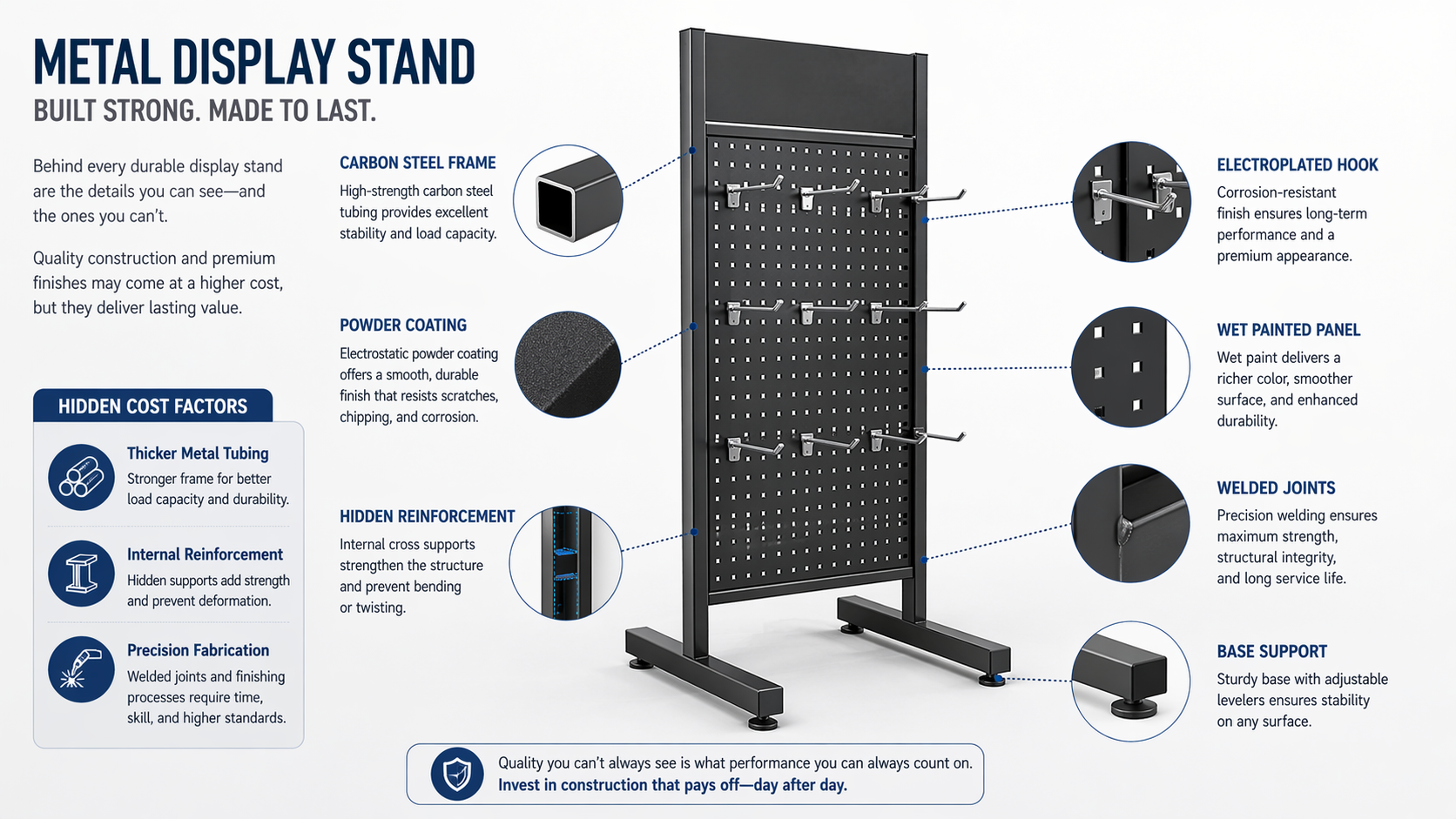
Once the base material is chosen, the next question is how the surface should be finished. Buyers sometimes treat this as a color decision. It is more than that. The surface finish affects corrosion resistance, scratch performance, overall look, and how the stand holds up after months of use on the shop floor.
For many retail metal displays, powder coating is the most practical finish. It offers a durable coating, good corrosion resistance, a smooth appearance, and a broad range of color choices. That is one reason black, white, and brand-color powder coated stands are so common in retail. They look clean, feel commercial, and usually hold up well in normal in-store use.
If a buyer asks for a standard recommendation with no unusual visual requirements, powder coating is often the safe starting point. Not flashy. Just reliable.
Electroplating is usually chosen when the project needs a metallic surface effect rather than a fully coated painted look. Chrome-like hooks, shiny arms, decorative accents, or exposed metal parts often fall into this category. Electroplating can improve appearance and, in some cases, add surface protection as well.
This finish is not always used across the whole display stand. More often, it appears on selected parts where the visual effect matters most. That detail is worth explaining in the article, because many buyers assume a bright metallic part is just a style choice. It is not. It usually reflects a different process route and a different cost structure.
Wet painting is still used in metal display projects, especially when a project needs certain visual effects, flexible color options, or a finish style that does not naturally fit powder coating. It can work well in the right application. But in many retail environments, it may not match powder coating for long-term scratch and wear resistance.
That does not make it a bad option. It just means buyers should choose it for the right reasons. Sometimes appearance flexibility matters more. Sometimes durability matters more. Those are not the same job.
This is a useful section to keep simple. Do not turn it into a factory manual.
The point is this: a surface finish is there to do several things at once. It can protect the metal from corrosion, help the stand resist daily wear, improve brand presentation, and shape the overall visual quality of the display. For a POP display in a busy retail setting, that combination matters. A stand may need to look sharp on day one, but it also needs to look acceptable after weeks or months of customer traffic.
So when comparing finishes, buyers should not only ask, “Which one looks better?” They should also ask, “Which one fits the product, store environment, and usage cycle better?”
This is the part many buyers miss at first.
A display stand is often judged by its visible surfaces. The color looks fine. The size looks right. The shape seems similar. But the real cost difference often sits underneath that surface, in places the customer may never pay attention to unless something goes wrong later.
One iron display stand may use thicker metal, while another uses thinner material to cut cost. On paper, the dimensions look similar. In practice, they do not perform the same way. Thickness affects stiffness, load-bearing capacity, long-term stability, and the overall feel of the display. It is not a cosmetic difference. It is a structural one. Thickness and fabrication complexity are well-known cost drivers in sheet metal work.
That is why buyers should never compare quotations by dimensions alone.
Some of the most important parts of a metal display stand are not front-facing at all. Back supports, inner brackets, base reinforcement, and concealed support bars may not show up in product photos, yet they can make a big difference in stability and service life.
This is where “invisible cost” starts to make sense. Those hidden parts are not there to impress visually. They are there to stop wobbling, support heavier loads, and reduce the risk of failure in real store use.
Good welding is not free. Smooth grinding is not free. Careful surface preparation before coating or plating is definitely not free. A clean final appearance often depends on the work done before the visible finish is even applied. That is one reason simple-looking displays can still be labor-intensive to produce. Surface prep is part of what supports coating performance and appearance.
This is also why some lower-priced stands look acceptable in photos but feel rougher, less stable, or less refined in person. The difference is often not dramatic at first glance. It shows up later.
A better base structure, better weight distribution, better weld control, and better prep work usually lead to a more stable display. Less shaking. Less deformation. Fewer problems after installation. Over time, that can mean lower maintenance risk and fewer replacement issues.
So yes, the hidden parts can cost more. And honestly, they should. They are often doing the hardest work.
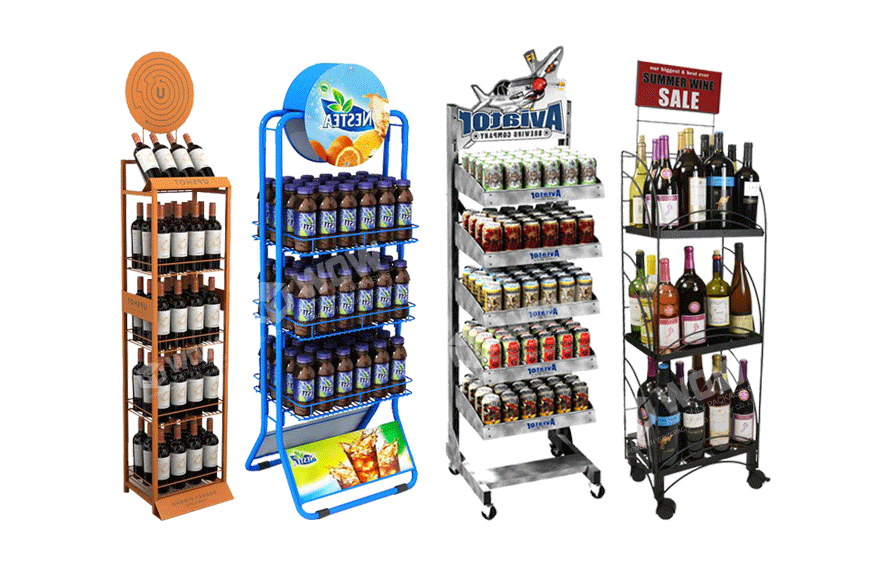
A smart buyer should compare more than appearance. Start with the product itself. How heavy is it? How many SKUs will the stand carry? Is the stand meant for a short campaign or long-term store use? Will it sit in a dry retail environment, or somewhere more demanding?
Then look at the finish. Powder coating often makes sense for general retail use. Electroplating may suit decorative visible parts better. Wet painting can work when visual flexibility matters. There is no single finish that wins every time.
Finally, ask the uncomfortable questions. What is the metal thickness? Where is the reinforcement? How are the welds handled? What finish process is actually included? A reliable metal display stand supplier should be able to answer those without sounding vague.
Conclusion
A metal display stand is more than a metal frame with a color on top. Its real value comes from the combination of material choice, surface finish, and structural quality. That is what affects how the stand looks, how long it lasts, and how well it performs in retail.
So when you evaluate a metal display stand, do not stop at the visible surface. Look at the hidden work too. Very often, that is where the real difference is.
And if the stand is meant to function as a POP display, that hidden work matters even more. A display only does its job when it stays stable, supports the product properly, and still looks right after the launch buzz fades.


3/F No. 6 Hedi Road, Gongming Street, Guangming District, Shenzhen City, GD, China, 518106


