
Retail displays do not all do the same job. Some are there to grab attention fast. Some are better at nudging shoppers to pick up one more item. That is exactly why sidekick displays and endcap displays get compared so often.
At first glance, they can seem pretty similar. Both sit in visible areas. Both are used for promotions. Both can help move product. But in real stores, they work differently. The better choice usually comes down to three things: what you are selling, where the display will sit, and what you want shoppers to do.
This is not just a design question. It is a merchandising question.
A brand might need to launch a new product, support a seasonal offer, or increase add-on sales in a crowded aisle. In one case, a sidekick display makes more sense. In another, an endcap does the heavy lifting. Same store. Different job.
That is why the comparison matters. Choosing the wrong format can make a promotion feel weak, cluttered, or just easy to ignore.
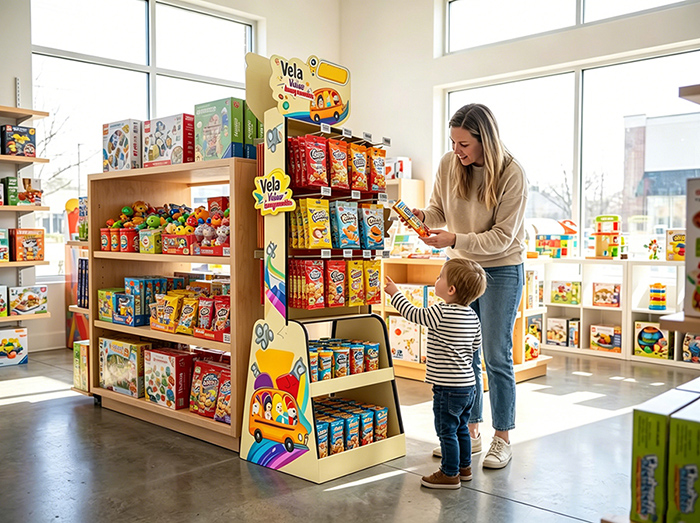
A sidekick display is a compact display attached to the side of a shelf or the side of an endcap. You may also hear people call it a power wing. Either way, the idea is simple: use side space to create extra selling space.
Sidekick displays usually work best for small, lightweight products that shoppers can grab quickly. Think batteries, snacks, beauty accessories, trial-size products, or low-cost add-ons. They are not built for big volume. They are built for convenience.
That is really their strength. A shopper is already looking at one category, then notices one more useful item right beside it. Small move. Extra sale.
An endcap display sits at the end of an aisle. It is one of the most visible spots in the store, sometimes the most valuable one, depending on the layout.
Compared with a sidekick, an endcap gives you more room to work with. More products, more facings, more presence. It is often used for featured promotions, new launches, seasonal programs, or grouped product displays that need a stronger visual push.
So while a sidekick feels more like a smart add-on, an endcap feels more like a statement.
Placement and Visibility
A sidekick display is usually seen at close range. It works when the shopper is already browsing nearby. That makes it good for add-on selling and product pairing.
An endcap works earlier in the shopping path. It can catch attention before the shopper even enters the aisle. That gives it more stopping power, especially for broader promotions.
So the question is not which one is more visible in a general sense. It is how that visibility happens.
Product Size and Capacity
This one is pretty straightforward.
Sidekick displays are better for smaller products and fewer SKUs. Endcap displays are better when you need more inventory, more variety, or more shelf presence. If the packaging is bulky or the promotion involves a full product line, the endcap usually has the advantage.
Trying to force a large product program into a small sidekick often looks awkward. And sometimes it just does not work well in-store. Simple as that.
Promotion Goal
If the goal is impulse purchase, sidekick displays often perform better. They sit beside related items and make it easy for shoppers to toss one more product into the basket without much thought.
If the goal is a featured promotion, a new launch, or a seasonal push, endcaps usually work better. They are stronger when the campaign needs space, clarity, and a bigger visual moment.
That is the real split:
sidekick = quick add-on
endcap = bigger retail statement
Space and Store Execution
Sidekick displays take up less space. That makes them useful in tighter store layouts or campaigns where you want flexibility and fast rollout.
Endcaps need a more defined area and a bit more planning. They usually involve more stock, more visibility, and more replenishment. That is not a downside by itself. It just means the execution needs to match the ambition of the display.
Sidekick displays are a strong fit for products that are easy to understand and easy to grab. Small snacks, batteries, beauty add-ons, accessories, travel-size items, and low-price impulse goods all work well here.
They also do a good job with complementary products. A sidekick placed next to the main category can feel timely, helpful, and hard to ignore. That is why they work so well for cross-merchandising.
The product does not need a big stage. It just needs the right placement.
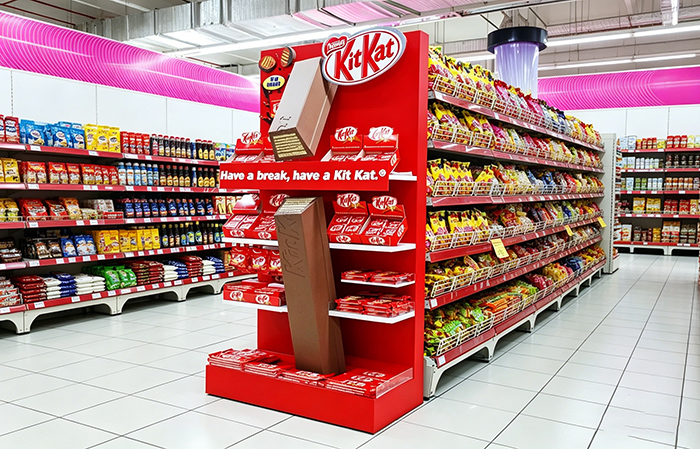
Endcap displays work better for larger products, grouped assortments, and promotions that need more visual weight. Beverages, boxed foods, household items, skincare ranges, and seasonal bundles are typical examples.
They are also a better fit when the brand wants to present a collection rather than a single add-on. That could be a new launch, a holiday campaign, or a themed retail program with multiple SKUs.
In short, when the promotion needs scale, the endcap usually makes more sense.
Sometimes it is not really a choice between one or the other.
A brand might use an endcap as the main campaign display, then add sidekick displays nearby to support cross-selling in other parts of the store. That kind of setup can work well because the endcap builds awareness, while the sidekick picks up smaller follow-on purchases.
Used together, they do different jobs. And that is often the point.
Choose a sidekick display when:
the product is small and lightweight
the goal is add-on or impulse sales
store space is limited
you want a flexible display tied to an existing shelf set
Choose an endcap display when:
the promotion needs stronger visibility
the product range is larger
more stock and more facings are required
the campaign needs a clearer in-store focal point
Before deciding, look at the basics: product size, SKU count, store layout, replenishment needs, and campaign goal. Sounds obvious, maybe. But plenty of retail programs go off track because teams choose the display that looks impressive instead of the one that actually fits the job.
Conclusion
So, which works better in retail?
Neither one is better across the board. A sidekick display works better for compact products, quick add-on sales, and flexible placement. An endcap works better for bigger promotions, broader visibility, and higher-capacity merchandising.
That is really the answer. Not flashy, but true.
The best POP display is the one that fits the product, the space, and the shopper moment. Once those line up, the display starts doing what it is supposed to do.


3/F No. 6 Hedi Road, Gongming Street, Guangming District, Shenzhen City, GD, China, 518106


