
Walk into any high-performing retail space — a flagship fashion store in Dubai, a specialty wine shop in Amsterdam, a lifestyle brand pop-up in Singapore — and you'll notice something: the displays that stop shoppers in their tracks are rarely made from a single material.
The metal display stand gives the structure authority and permanence. The wooden display stand brings warmth and brand storytelling. The PVC display stand adds versatility, vivid graphics, and effortless adaptability. When these three materials work together in a single custom pop display, brands get something that none of them could deliver alone.
This article walks through the real advantages of mixed-material POP displays, what makes each material special, and the key factors to consider when customizing one
There's a reason the world's most recognized brands — from fast-moving consumer goods giants to premium lifestyle labels — consistently choose mixed-material shop pop displays over single-material alternatives. It's not just aesthetics. It's strategy.
Cost Intelligence:Allocate premium materials where customers look, economize where they don't. Maximum visual impact at optimized budget.
Visual Depth:Each material creates a distinct visual texture. Combined, they produce a display with hierarchy, warmth, and brand character.
Function by Design:Each material is assigned the job it does best. The result is a display that performs structurally and commercially.
Beyond budget and beauty, mixed-material POP displays solve a challenge that single-material solutions simply cannot: they let you customize different zones of a display for different functions. The structural frame carries the weight. The graphic panels carry the brand message. The shelf surfaces carry the product — each optimized independently, performing as a unified system.

A metal display stand is the workhorse of retail merchandising. Whether it's a powder-coated steel floor display in a supermarket, a chrome wire rack in a pharmacy, or a heavy-gauge iron frame in a flagship store, metal delivers structural performance that no other material can match over time.
Why Brands Choose Metal Display Stands
Exceptional load capacity — handles heavy products like wine bottles, electronics, and hardware with ease
Long service life — a well-built metal stand serves reliably for 8–10+ years, delivering outstanding ROI
Design flexibility — powder coating, chrome plating, brushed finishes, and custom RAL colors give brands complete creative control
Structural adaptability — modular metal frames can be reconfigured as product lines or store layouts evolve
Universal retail acceptance — required by major retailers including Walmart, Costco, and leading hypermarket chains globally
In mixed-material configurations, the metal display stand typically forms the primary structure — the skeleton that everything else attaches to. This is where its strength-to-weight ratio, dimensional stability, and long-term rigidity make it irreplaceable. The visual elements can evolve; the structure endures.
If metal is the structure, PVC is the voice. A PVC display stand brings vivid, high-resolution brand graphics to life at retail --- and its combination of lightweight construction, cost-efficiency, and print versatility makes it one of the most requested materials for custom pop displays worldwide.
The PVC Advantage in Retail Environments
If metal is the structure, PVC is the voice. A PVC display stand brings vivid, high-resolution brand graphics to life at retail — and its combination of lightweight construction, cost-efficiency, and print versatility makes it one of the most requested materials for custom pop displays worldwide.
The PVC Advantage in Retail Environments
High-resolution UV printing capability — full-color brand graphics, product photography, and promotional messaging printed directly onto PVC panels
Excellent surface finish options — gloss, matte, textured, frosted — to match any brand aesthetic
Fast production turnaround — ideal for seasonal campaigns, product launches, and time-sensitive promotional displays
Cost-effective for promotional and temporary displays while maintaining a premium on-shelf appearance
In mixed-material shop pop displays, PVC typically handles the brand-facing surfaces — the panels, header boards, shelf talkers, and side wings that carry graphics and promotional content. This is where PVC's print performance and surface versatility genuinely outperform all other materials.
There are some things only wood can do in a retail environment. It brings natural warmth, tactile richness, and a sense of craftsmanship that immediately elevates the perceived value of any product displayed on it. A wooden display stand is not just a platform — it's a brand statement.
Where Wood Makes the Difference
Premium product categories — wine, spirits, cosmetics, gourmet food, jewelry, and wellness products benefit enormously from wood's natural prestige associations
Brand storytelling — wood grain, natural textures, and warm tones create an emotional connection with shoppers that no synthetic material can replicate
Durability with refinishing potential — unlike plastic, wood can be sanded, restained, or refinished to extend its retail life and keep the display looking fresh
In mixed-material configurations, wooden components are typically deployed where the shopper's hand and eye make direct contact — the shelf surfaces, counter-top units, and decorative fascia panels. Paired with a durable metal display stand structure and vivid PVC display stand graphics, wood creates the premium finishing layer that makes a custom pop display feel genuinely considered and brand-intentional.
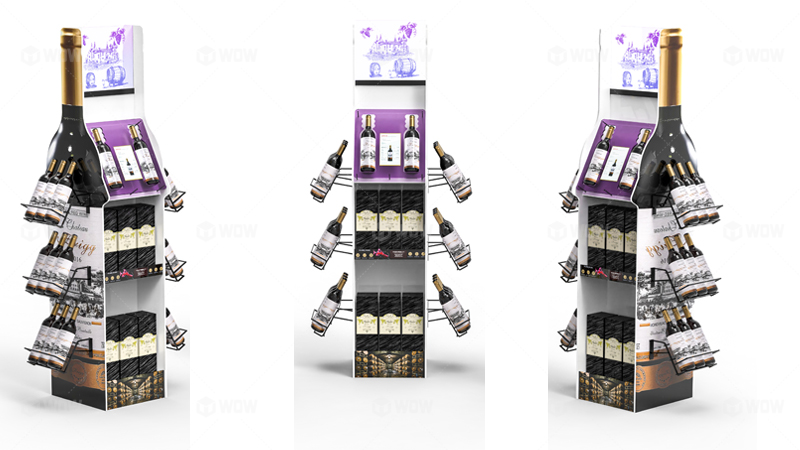
In 2025, WOW Display's design team set out to build a flagship mixed-material display system for a wine and beverage retail client --- one that needed to work across multiple retail formats, scale to international markets, and deliver a premium brand presence without requiring a premium-only budget.
The Mixed-Material Formula That Worked
The design team assigned each material its optimal role: a reinforced iron skeleton for structural integrity and load performance, lightweight PVC framing for mobility and form retention, and SGS-certified EVA/EXA composite panels for the brand-facing decorative surfaces.
Iron skeleton: provides the load-bearing structure rated at 15kg per modular shelf tier — fully validated against wine bottle weights
PVC framing: keeps total display weight low and manageable — easy repositioning across store zones without specialized equipment
Composite decorative panels: UV-printed at 1:1 scale with wine bottle silhouette graphics and full brand identity — crisp, vivid, and consistent across every unit
Optional integrated LED lighting: up to 600 lumens per square meter, elevating product presentation and driving impulse purchase behavior
The Outcome
The result was a display system that assembled in under 20 minutes using standardized modular components — no specialized tools, no custom installation crew. The same configuration deployed successfully across supermarket promotional zones, wine specialty retail, seasonal campaign setups, and hypermarket beverage aisles across multiple markets.
The best custom pop displays aren't the ones with the most materials — they're the ones where every design decision was made with a clear brief. Here's what to think through before you reach out to a display partner, and what sharing this information unlocks for your project.
Retail Environment
You'll want to share the type of store, its specific location (indoor or semi-outdoor), the climate conditions it will face, and the expected duration of use. Providing these details helps determine the appropriate material grades and finish specifications required for optimal performance in that specific setting.
Product Category & Weight
Be clear about the product type being displayed, the exact weight per unit, the number of SKUs involved, and precisely how items will be presented—whether hung from hooks, placed on shelves, or stacked. This information enables precise structural engineering to ensure the display is perfectly matched to the real load requirements it will carry.
Brand Visual Identity
Supply your exact brand colors (using Pantone or RAL references), any logo usage guidelines, graphic assets, and your preference for surface finishes such as gloss or matte. Communicating these specifications ensures color accuracy and visual consistency across all the different material types used in the display.
Quantity & Rollout Scale
Outline the initial order quantity, the number of stores or locations receiving the display, and whether you are planning a phased rollout over time. Knowing the scale of production allows for optimized material selection, appropriate tooling investment, and the best possible unit cost across varying production volumes.
Budget Framework
Provide an indicative budget range per unit and clarify whether the display is intended for permanent, long-term use or for shorter campaign rotations. This guidance is essential for material allocation strategy, ensuring premium materials are deployed where they have the most impact while other areas are cost-optimized appropriately.
Ready to Build a Display That Actually Sells?
The best retail displays don't happen by accident — they happen when the right materials are selected for the right reasons, combined by a manufacturing partner who understands both the creative brief and the commercial reality of retail.
Contact WOW Display today to discover how Mixed-Material POP Displays can transform your brand image and environmental impact.


3/F No. 6 Hedi Road, Gongming Street, Guangming District, Shenzhen City, GD, China, 518106


