
Walk through almost any supermarket, discount store, or seasonal promotion zone, and you will see one pattern again and again: some products sell better when they are not lined up neatly on a standard shelf. They sell better when shoppers can see them fast, reach them easily, and toss them into the cart without much thought.
That is exactly where a dump bin display works best.
A dump bin is not a display for every product, and that is where people sometimes get it wrong. It is not automatically the best choice just because it holds a lot of stock. Its real strength is simpler than that. A dump bin display stand works when the product, the placement, and the shopping behavior all match the format.
This article explains what a dump bin display is, why retailers use it, when it makes sense, what products fit it best, and when another point of purchase display may be the smarter option.
A dump bin display is an open-top retail display used to present products in bulk or semi-bulk form. Instead of arranging every item in a highly structured shelf layout, the display allows products to sit in a more open, accessible format that encourages quick browsing and easy pickup.
That open structure is the whole point. A shopper does not need to stop, study, and compare too much. The display is built for speed.
Most dump bin display units share a few basic characteristics. They usually have a wide open top, lower front access, enough depth to hold a meaningful quantity of product, and a shape that allows customers to grab items without feeling like they are disturbing a carefully organized display. A cardboard dump bin display is especially common because it is lightweight, cost-effective, easy to print, and well suited to short-term promotions.
A dump bin also differs from a standard floor display in an important way. A traditional floor display is often more structured. It may use shelves, hooks, compartments, or precise facings to guide the shopper visually. A dump bin is more direct. It trades neat arrangement for easier access and faster interaction. That does not make it less useful. It just makes it useful in a different way.
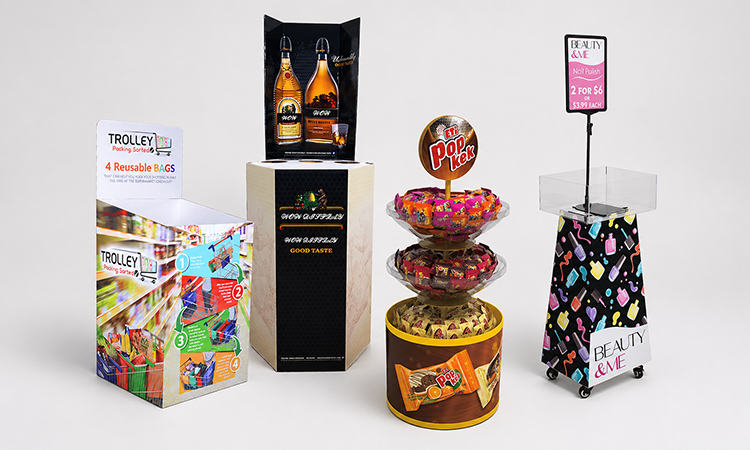
Retailers use dump bins because some products do not need a polished, highly controlled presentation to sell well. They need visibility, access, and momentum.
The first reason is impulse. A retail dump bin reduces friction. Products are visible, reachable, and easy to take. That matters for low-barrier items where the customer does not need much explanation before buying. Candy, snacks, small toys, travel-size items, or seasonal extras often benefit from this kind of open presentation because the display supports the natural “grab and go” behavior.
The second reason is volume. A dump bin display stand can hold more stock than many smaller promotional formats, which makes it useful when the goal is to move product quickly. Short-term campaigns, discount programs, clearance events, and seasonal sell-through often benefit from this. Sometimes abundance itself becomes part of the selling message. A full bin looks active. It looks like stock is moving. It can also create a stronger value impression.
The third reason is accessibility. In a fast-moving retail environment, not every shopper wants to engage with a carefully structured shelf. Some people are in a hurry. Some are browsing casually. Some only give a product two seconds. A dump bin meets that kind of behavior well because it does not ask the shopper to do much work before picking something up.
A dump bin is most effective when the retail objective is clear. It should not be chosen just because it is common. It should be chosen because the selling situation supports it.
For Seasonal and Limited-Time Promotions
This is one of the strongest use cases. Seasonal products often need fast visibility and quick sell-through rather than long-term organized shelving. Holiday candy, back-to-school items, summer promotions, giftable impulse products, and clearance merchandise all fit this pattern. A dump bin display works well here because it is easy to place, easy to stock, and immediately reads as promotional.
It also suits temporary retail programs where the product does not need a permanent presentation. The display can do its job, move product, and leave.
For High-Traffic Retail Zones
Placement matters a lot. A dump bin display usually performs best in areas where shoppers naturally pass, slow down, or change direction. Main aisles, promotional islands, end-of-aisle zones, front-of-store areas, and seasonal event spaces are all strong examples.
In these locations, the format supports fast visual recognition and quick physical access. Put the same bin in a low-traffic corner, though, and a lot of its value disappears. A retail dump bin is not just a structure choice. It is a placement strategy too.
For Products That Benefit From Quick Grab-and-Go Behavior
Some products sell well when shoppers make a fast decision. They do not need a long explanation, a technical comparison, or a premium display environment. They just need to be visible and easy to take. That is where a cardboard dump bin display can be very effective.
This works best when the product is easy to understand at a glance. The customer should not need to figure out what it is, how it works, or why it matters. The simpler the buying behavior, the better the format usually performs.
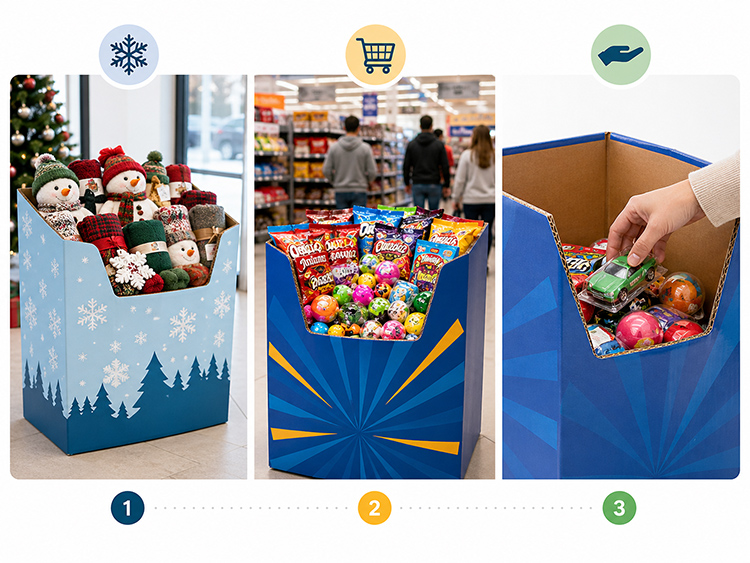
Not every category belongs in a dump bin. The best fit usually comes from products that are small, lightweight, fast-moving, and easy to self-select.
Snacks and candy are obvious examples. They are simple, low-risk purchases and often bought on impulse. Small toys and novelty items also fit well, especially in family-oriented retail environments. Promotional beauty samples, travel accessories, low-cost personal care items, and seasonal add-on products can work too.
Another strong category is products sold in volume or loose multiples. A dump bin display stand is often a good match when the product does not need perfect facing or exact shelf alignment. In these cases, the display does not need to look highly structured to be effective. In fact, a more abundant, open presentation may support the sales goal better.
Products that do not depend on premium presentation also tend to perform well in this format. If the item can still look appealing in a more relaxed, accessible setting, a dump bin may be a smart choice. This is an important point. Format and product perception need to match. The display should support the product’s retail personality, not fight against it.
This is where the article becomes more useful, because a dump bin is not a universal answer.
The first poor fit is premium presentation. Products that rely on a refined, highly organized, or elevated brand image usually do better in a more controlled format. Premium skincare, luxury accessories, higher-end electronics add-ons, and carefully positioned gift products may lose perceived value in an open bin. In those cases, a structured point of purchase display usually works better.
The second poor fit is product stability. Fragile items, heavy products, awkward shapes, or anything difficult to stack can become messy or damaged in a dump bin. If the structure cannot maintain clean access and product safety, the format starts working against the sale.
The third poor fit is explanation-heavy buying. Some products need comparison, education, or stronger storytelling before the shopper is ready to buy. A dump bin is not ideal for that. If the customer needs time, context, or feature guidance, another format such as a floor display, countertop display, or more structured merchandising unit is often the better choice.
The best way to choose a display is to begin with the retail objective, not the structure itself.
Start by asking what the display is supposed to do. Is the goal to drive impulse pickup? Push a seasonal promotion? Move clearance stock? Increase visibility for low-cost add-on products? Support high-volume movement? If the answer is yes to those types of goals, a dump bin display is worth serious consideration.
Then look at three things together: the product, the placement, and the shopper behavior. A format that suits the product but sits in the wrong location can still underperform. A format placed well but carrying the wrong product can also fail. The strongest results happen when all three support the same retail logic.
Cost matters too, of course, but it should not be the only filter. A cheaper display that performs poorly is not an efficient choice. The more useful questions are practical ones:
Is the product easy to access?
Is the display stable enough for the expected load?
Does the format suit the store environment?
Will store staff be able to refill it easily?
Does the presentation support the product’s price point and image?
That is the real decision framework. A cardboard dump bin display can be a very effective retail display solution, but only when it fits the actual use case.
Conclusion
A dump bin display is one of the most effective retail formats for the right kind of product and the right kind of promotion. Its strength comes from directness. It makes products visible, accessible, and easy to pick up, which is exactly what some retail programs need.
But it is not a format to use automatically. It works best when the product is easy to understand, easy to carry, and well suited to open presentation. It performs even better when placed in high-traffic zones and used for promotional, seasonal, or volume-driven selling.
So the real question is not whether dump bins work. They do. The better question is whether your product, your retail environment, and your sales objective are the right match for the format.
FAQ
1.What is a dump bin display used for?
A dump bin display is mainly used for promotional, seasonal, impulse-driven, or high-volume product presentation. It helps make products easy to notice and easy to pick up in retail environments.
2.What products work best in a dump bin display?
Small, lightweight, fast-moving products usually work best. Common examples include snacks, candy, toys, accessories, beauty trial items, and seasonal promotional goods.
3.Are dump bin displays only for supermarkets?
No. They are common in supermarkets, but they can also work in convenience stores, discount retail, seasonal zones, event-based promotions, and other high-traffic retail environments.
4.When should retailers avoid using a dump bin display?
Retailers should avoid dump bins when the product needs premium presentation, careful organization, strong product explanation, or extra protection because of weight or fragility.
5.What is the difference between a dump bin display and a floor display?
A floor display is usually more structured and organized, often with shelves or defined product facings. A dump bin display is more open and better suited to quick, grab-and-go shopper behavior.
6.Can a cardboard dump bin display support heavy products?
It can support some weight, but it is usually better suited to lightweight or moderately weighted items. Heavy products often need a more structured and reinforced display format.


3/F No. 6 Hedi Road, Gongming Street, Guangming District, Shenzhen City, GD, China, 518106


