
In large retail stores, products do not always lose attention because they are weak. More often, they get lost because the shelf is crowded, the aisle is long, and shoppers are moving fast. A good product can sit in the right category and still fail to stand out.
That is where a Pallet Display becomes useful.
A pallet-based presentation does something a normal shelf usually cannot do as easily: it creates an independent selling zone. It brings product volume, brand graphics, and promotional messaging together in one visible block. From a customer’s point of view, that means the product feels harder to ignore. From a brand’s point of view, that means a better chance of being noticed before the shopper even reaches the shelf decision stage.
Still, not every product needs a pallet format, and not every store should use one the same way. The value of a pallet display depends on product type, store layout, shopper behavior, and campaign goal. When those pieces line up, pallet displays for retail can become one of the strongest visibility tools on the floor.
A pallet retail display is a display unit built on a pallet base and designed for in-store selling. It is not simply a transport pallet with products stacked on top. In a retail program, it is meant to function as both a merchandising structure and a visual selling tool.
That difference matters.
A standard shelf presentation depends on the existing aisle layout. A pallet display creates its own retail presence. It usually combines a pallet base, a product holding structure, branded panels, and sometimes a header or side graphics. Depending on the project, the format may be a full pallet, half pallet, or quarter pallet.
For buyers, the practical point is simple: this is not just a logistics unit. It is a ready-to-sell structure designed to increase exposure, support product loading, and make a stronger impression in-store.
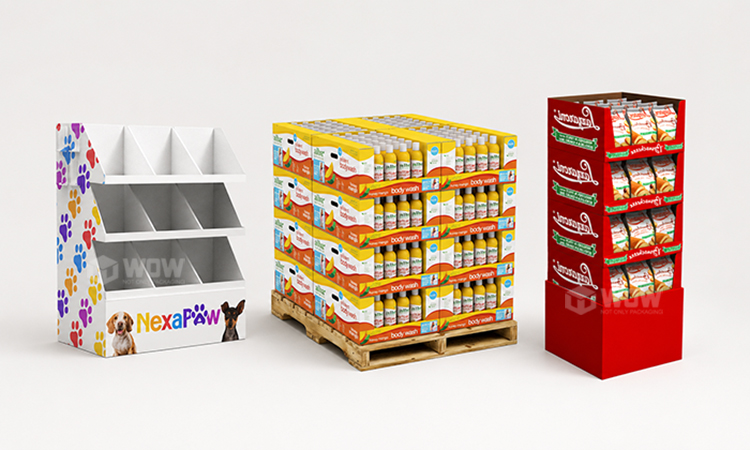
A pallet display does not boost visibility for only one reason. It works because several visibility factors come together at the same time.
Stronger visual presence
The first advantage is scale. A pallet display usually occupies more visual space than ordinary shelf presentation. That larger footprint gives the product a stronger presence in the aisle. Shoppers notice mass before they notice detail. A group of products on a shelf can blend in; a full pallet display often does not.
This is especially true in larger retail environments where shoppers are scanning from a distance. A pallet shop display can be noticed from several meters away, while a standard shelf item may only compete once the shopper is already standing in front of the category.
Better retail positioning
Visibility also comes from placement. Most display pallets are not placed in weak traffic areas. They are used in promotional zones, aisle ends, entry areas, or seasonal spaces where shoppers naturally pass. That gives the product an immediate exposure advantage.
In other words, a pallet display is not only more visible because it is larger. It is more visible because it is often placed where attention is already concentrated.
Product volume plus brand message
Another reason pallet displays work well is that they combine product quantity with graphic communication. The shopper does not only see a logo or a headline. They see branded messaging and visible stock together. That combination can make the offer feel more substantial, more active, and more worth checking.
A shelf can show the product. A pallet display can make the product feel like an event.
Not every retail environment benefits equally from pallet-based merchandising. The strongest results usually appear when the store format and the display footprint actually support the format.
Warehouse clubs and large-format retail
This is one of the most natural uses. In warehouse clubs and large-format stores, floor space is broader, shopping behavior is more volume-driven, and bulk packs are common. Shoppers expect to see larger merchandising structures. In these conditions, pallet displays for retail fit naturally into the store logic.
For brands selling beverages, bulk groceries, household products, or club-size packs, a pallet display often feels less like an extra display and more like part of the normal selling environment.
Supermarkets and promotional aisle zones
Supermarkets can also be a strong fit, but the use is a bit more selective. A full pallet in the wrong place can feel oversized. In the right place, though, it can work very well.
The most effective supermarket uses are usually tied to:
aisle ends
entry promotional zones
seasonal sections
special price campaigns
launch displays for short-term retail pushes
Here, the display is not replacing the shelf. It is supporting a promotional objective that needs more visibility than the shelf alone can offer.
Campaign-driven retail programs
A pallet display is especially useful when the goal is not just everyday stocking, but stronger campaign impact. New product launches, bundled promotions, holiday programs, price-off events, and limited-time pushes all benefit from a structure that feels more visible and more temporary in a good way. It signals action. Something is happening here.
That matters. Shoppers respond differently when a product looks like part of a promotion rather than just part of the shelf.
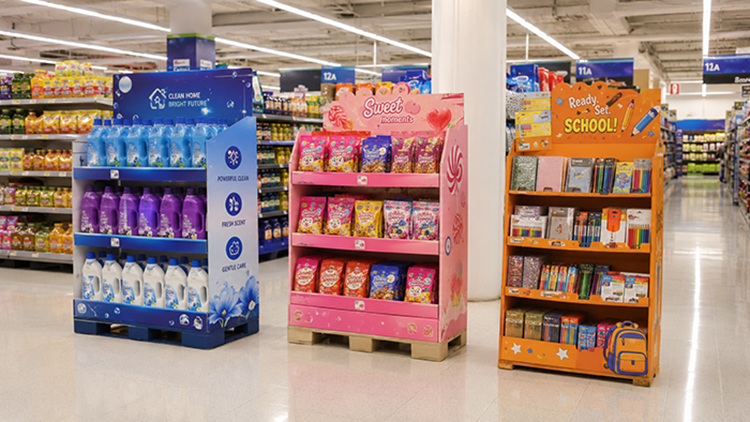
A large display is not automatically a good display. Some units take up space without doing much else. The more effective ones usually get a few basics right.
Clear graphics and fast messaging
Retail communication has to work quickly. A shopper will not stand in the aisle and decode a complicated display. Strong pallet displays for retail usually use bold branding, limited wording, and a clear promotional message that can be understood in seconds.
This is one of the most common problems in weaker projects: too much visual noise, not enough communication hierarchy. If the product is visible but the message is unclear, visibility still gets wasted.
Easy shopper access
Product access matters just as much as the graphic design. A pallet retail display should not force shoppers to reach awkwardly, bend too far, or disturb the whole structure to remove one pack. If it looks impressive but feels inconvenient, the display may attract attention without converting that attention into sales.
A good pallet display keeps access direct. The shopper should see the product, understand the offer, and remove the item with very little friction.
Structural stability
This point gets underestimated until something goes wrong. If the display leans, crushes, breaks down under product weight, or looks messy after transport and store handling, visibility drops fast. Structural weakness does not just create operational trouble. It damages retail appearance.
That is why a strong pallet display is not only about graphics. It needs real load planning, stable construction, and a format that still looks good after real use begins.
The right balance of stock and branding
Too much empty branded space makes the display feel underloaded. Too much product with too little branding can weaken recognition. The best balance depends on the product and the retail environment, but in general the display should show enough stock to feel active and enough branding to feel intentional.
That balance is one reason some display pallets look powerful and some just look crowded.
A pallet format is not equally suitable for every category. It works best when the product benefits from stronger visual mass and easy promotional selling.
High-volume and bulk-oriented products
This is the most obvious fit. Beverages, snack multipacks, household goods, pet products, and larger grocery packs often work very well on pallet displays. These categories already carry a volume logic, so a pallet structure feels commercially natural.
Products needing strong promotional presence
Some products are not bulk items but still benefit from pallet presentation because the campaign needs more impact. Seasonal packs, limited-time bundles, launch formats, and promotional stock are good examples. These products may not live on a pallet long term, but they can benefit from short-term visibility.
Products with simple shopping logic
A pallet display works better when the shopper can understand the product quickly. If the packaging is recognizable and the buying decision is relatively straightforward, the format supports fast engagement. The more explanation a product needs, the less useful pure display scale becomes on its own.
A pallet format can be powerful, but it is not always the smartest choice. This is where brands need to stay practical.
Product image
If the product depends on a highly controlled, premium, or refined presentation, a pallet may not always be the best route. Some categories benefit more from structured shelves, smaller focused displays, or formats that feel less mass-oriented. Big visibility is not always the same as the right visibility.
Store footprint
Not every store can support the same pallet format. Smaller stores, tighter aisles, and restricted floor layouts may reduce the value of the structure. In those settings, the display can feel intrusive rather than useful. A quarter pallet or another promotional format may be more effective than a full pallet simply because the environment demands it.
Execution risk
A pallet display only helps if it still looks good after shipping, loading, and handling. If the program carries too much risk around transport damage, unstable stacking, or difficult restocking, the visibility gain may not justify the trouble. A display should make the retail program easier, not heavier.
This is usually the real customer question. Not “Can we make one?” but “Will it actually help enough to justify the spend and floor space?”
A useful decision process starts with the commercial objective. Are you trying to launch something new, drive seasonal volume, support a price promotion, or create stronger aisle-level visibility? If yes, a pallet display may be worth serious consideration.
Then look at the product and the store together. Is the packaging strong enough to support open retail presentation? Is the product suited to cart-based shopping or volume purchase? Does the store have the space and traffic pattern to support a pallet format?
Finally, choose the right pallet size. Bigger is not automatically better. A full pallet may be appropriate in a club store, while a quarter pallet may work better in a supermarket aisle-end program. The correct format should match the real store need, not just the brand’s desire for scale.
Conclusion
A Pallet Display boosts product visibility because it combines larger physical presence, better traffic positioning, visible product quantity, and clear brand communication in one retail structure. When those elements work together, the product becomes much harder to overlook.
That said, a pallet display only works well when it fits the real retail situation. The product has to suit the format. The store has to support the footprint. The campaign has to justify the visibility push.
So the most effective pallet displays for retail are not simply the biggest ones. They are the ones that match the product, the shopper, the store, and the sales objective with much less guesswork and a lot more intention.
FAQ
1.What is a pallet display in retail?
A pallet display in retail is a ready-to-sell display unit built on a pallet base and used to present products in a more visible, promotional way than standard shelf merchandising.
2.How do pallet displays increase product visibility?
They increase visibility by creating stronger physical presence, using high-traffic retail placement, showing more product at once, and combining product volume with clear branding.
3.What products work best on a pallet display?
Bulk-oriented products, multipacks, beverages, household items, pet products, seasonal packs, and promotional bundles are often good fits because they benefit from larger-scale retail presentation.
4.Where should a pallet display be placed in a store?
Common strong positions include aisle ends, entry zones, seasonal sections, promotional islands, and large-format retail floor areas where shopper traffic is naturally high.
5.What is the difference between a quarter pallet display and a full pallet display?
A quarter pallet display uses less floor space and is often better for tighter retail environments or smaller campaigns, while a full pallet display creates stronger volume impact and suits larger-format stores.
6.When should a brand avoid using a pallet display?
A brand may want to avoid pallet display use when the product needs a premium, highly controlled presentation, when the store cannot support the footprint, or when execution risks outweigh the visibility benefit.


3/F No. 6 Hedi Road, Gongming Street, Guangming District, Shenzhen City, GD, China, 518106


